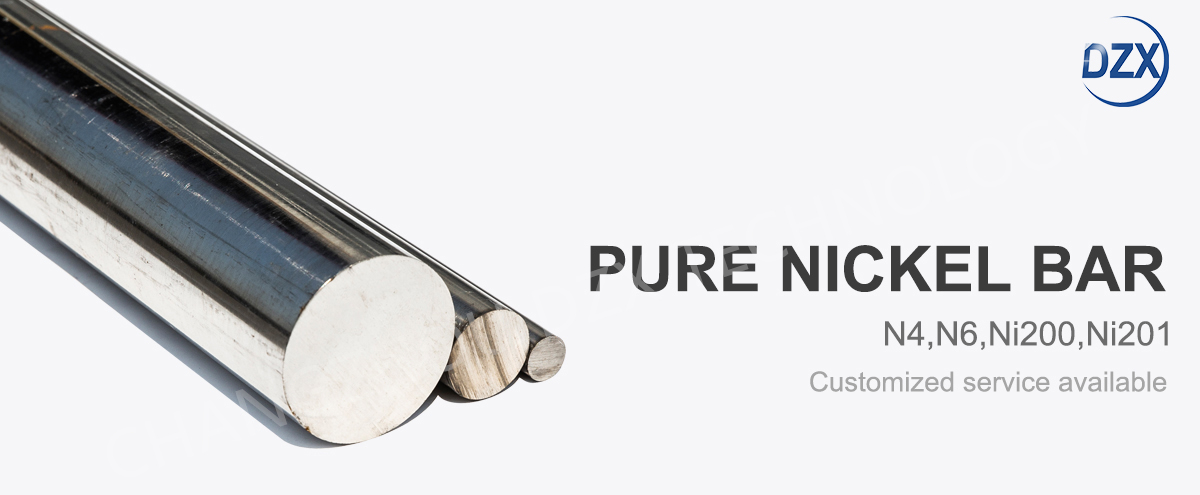
High Temperature Pure Nickel Rod & Bar – Ni200 Ni201
High temperature pure nickel rod and bar in Ni200 and Ni201 for hot caustic and oxidizing service inside its documented envelope: oxidation in air to about 800°C, load-bearing service to roughly 600°C, and caustic alkali handling at 300-450°C. Ni201 takes sustained hot service; annealed 8-20 mm rod ships from stock with mill certificates.
Factory-Direct from Changzhou, China | 60+ Export Countries | ISO 9001 & SGS Certified
High temperature pure nickel rod and bar in Ni200 (UNS N02200) and Ni201 (UNS N02201) is specified for hot caustic and oxidizing service within defined limits: about 800°C in air, and roughly 600°C where the part carries load. The low-carbon grade, Ni201, covers sustained hot service. Annealed rod in 8 mm, 10 mm, 12 mm and 20 mm is held in stock, with 3 mm to 300 mm produced to drawing and lengths to 6000 mm. Mill test certificates (EN 10204 3.1) accompany every lot.
Where the High-Temperature Limits Come From
Melting point is not the working limit. Ni200 and Ni201 melt far above the temperatures at which they are specified, and the ceilings come from oxidation and from strength instead. The metal resists oxidation in air to about 800°C through a protective oxide scale, and its strength falls steadily above roughly 600°C as it does for any unalloyed metal. Hot sulfur-bearing atmospheres attack nickel severely through low-melting nickel sulfides, so sulfur-bearing gas streams at temperature are outside the grade, as are gas-turbine and combustion-chamber duties that call for nickel superalloys. Between those boundaries sit the caustic, oxidizing and reducing duties that the grade serves at temperature.
Specifications
Form
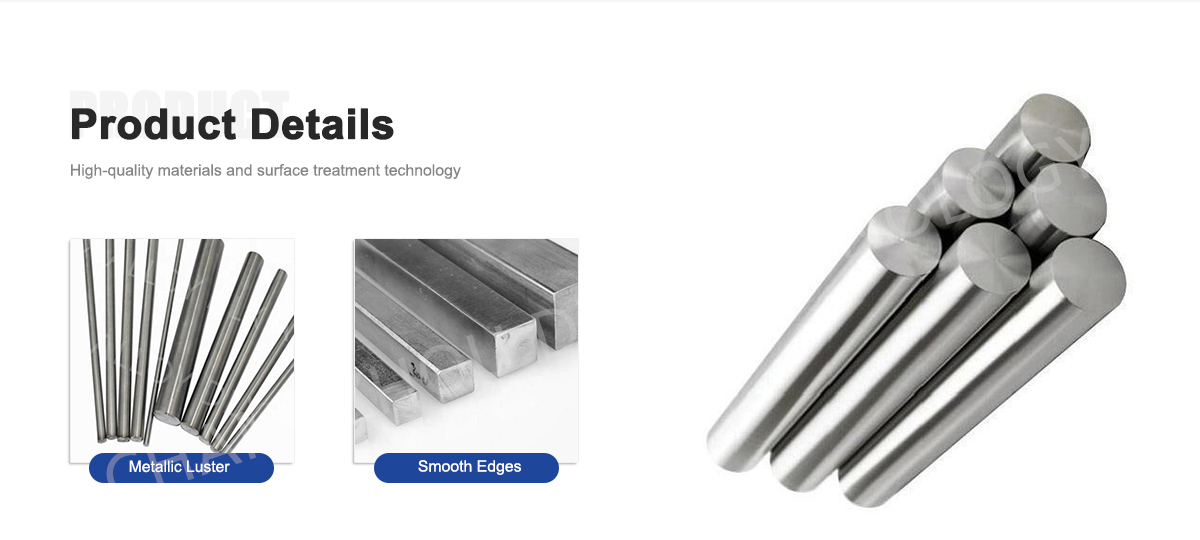
Round Bar / Rod (hexagonal and square per drawing)
Grades
Ni200 (UNS N02200) / Ni201 (UNS N02201)
Standard In-Stock Diameters
8 mm / 10 mm / 12 mm / 20 mm
Other Diameters
3-300 mm per drawing
Length
Per drawing (bar program supports up to 6000 mm)
Surface
Black / Peeled / Polished / Cold Drawn (Bright)
Temper
Annealed (standard)
Density
8.908 g/cm³
Tensile Strength (min)
462 MPa (annealed)
Yield Strength 0.2% (min)
148 MPa (annealed)
Elongation (min)
35%
Melting Point
1435-1446°C
Hexagonal and square sections, and the surface states in the table, are produced under the pure nickel bar program.
Key Strengths
Grade matched to the operating temperature, with Ni201 for sustained hot service.
Supplied into caustic evaporator, concentrator and handling equipment at temperature.
Oxidation behaviour in air documented up to its stated ceiling.
8-20 mm annealed rod held for hot-service orders; other sizes run to drawing.
Lot-level mill certificate issued with every shipment.
Technical Details
Caustic Evaporators and Concentrators at 300-450°C
The classic hot application for Ni200 and Ni201 is concentrated and molten caustic alkali handling between 300°C and 450°C: evaporator bodies and tube sheets, concentrator internals, caustic transfer lines, and the fittings and valve parts that go with them. Few metals hold that service at temperature in sodium or potassium hydroxide, which is why the equipment is built in nickel. Bar for these parts is supplied annealed, so it machines and welds predictably, and the grade is checked against the operating temperature before the order is scheduled.
Sustained Heat and the Carbon Question
The two grades differ in one respect that matters at temperature, which is carbon: Ni200 carries 0.15% max and Ni201 carries 0.02% max. Held between roughly 315°C and 760°C, the carbon in Ni200 can precipitate at grain boundaries and embrittle the metal over time, and that mechanism is why sustained high-temperature duty is written as Ni201. Where exposure is intermittent, or where service sits below that band, Ni200 remains the general-purpose grade for chemical and mechanical work. The pure nickel series covers both grades, and the distinction is settled at the drawing stage because it decides which grade is melted for the order.
Oxidation and Scale in Air
Oxidation in air is progressive: an oxide scale forms and stays adherent below the temperature ceiling, which keeps further attack slow. The choice this affects in practice is surface state. Hot parts in air develop a visible scale in service, so where a bright finish has to hold through service the part is machined from bright or peeled bar, and where the appearance of the part is not critical, black bar is the economical starting state. Surface selection is settled with the drawing and the operating temperature.
Thermal Expansion in Hot Assemblies
Nickel expands as it heats, and the coefficient matters wherever a hot part sits inside a cold housing or a bar passes through a clearance: at about 13.3 µm/m·K, a one-metre bar grows roughly 4 mm over a 300 K rise (calculated). Clearance, bolt-hole and support fits are sized with that growth in mind. Both grades expand alike, since carbon is the only difference between them, so the figure is taken from published physical data and applies to the delivered bar.
Chemical Composition
Element
Ni200 (UNS N02200)
Ni201 (UNS N02201)
Ni+Co (min)
99.2%
99.0%
C (max)
0.15%
0.02%
Cu (max)
0.25%
0.25%
Fe (max)
0.40%
0.40%
Mn (max)
0.35%
0.35%
Si (max)
0.35%
0.35%
S (max)
0.01%
0.01%
Mechanical & Physical Properties
Annealed bar: tensile strength ≥462 MPa, 0.2% yield strength ≥148 MPa, elongation ≥35%, hardness 90-120 HB. Physical constants: density 8.908 g/cm³, melting point 1435-1446°C, electrical resistivity 0.096 μΩ·m, thermal conductivity (Ni200) 70.2 W/m·K, coefficient of thermal expansion (Ni200) ≈13.3 µm/m·K, ferromagnetic below the Curie point of 358°C.
Quality Assurance
Each bar batch is analysed and inspected before packing: composition by spectral analysis, and dimension and surface against the grade standard. Mill test certificates (EN 10204 3.1) record the actual lot composition and mechanical properties, and every bar carries melt and lot traceability.
Applicable Standards
Ni200/Ni201: ASTM B160 (Nickel Rod and Bar). Export documentation per EN 10204 3.1. N4/N6 Chinese-grade equivalents follow GB/T 4435 on request.
References
Material data references ASTM B160; caustic-service and high-temperature guidance references the Nickel Institute (caustic handling in nickel equipment) and ASM Specialty Handbook: Nickel, Cobalt, and Their Alloys; batch-level composition is verified against mill test certificates and in-house inspection records.
Packaging & Delivery
Bar is supplied in bundles with protective wrapping, packed in export wooden cases labeled with the grade and heat number. In-stock diameters dispatch in 3-7 days, standard production in 7-15 days, and sizes to drawing in 15-30 days. Delivery is quoted to the receiving port, and payment is by L/C, T/T, Western Union or MoneyGram.
About DZX Alloy
DZX Alloy has melted and processed nickel-based material in Changzhou, Jiangsu since 2002 under ISO 9001 and SGS quality systems, and exports to 60+ countries. High-temperature enquiries are answered with the grade checked against the operating temperature and the atmosphere first: where a service falls outside the envelope described above, that is stated before a quotation is issued, and where it falls inside, the offer names the grade and the delivery.
Send the drawing, the operating temperature and the atmosphere for a quote with the grade confirmed.
FAQ
Q: At what service temperature does Ni201 become necessary? A: Sustained service above roughly 315°C calls for Ni201, whose 0.02% carbon limit avoids the grain-boundary precipitation that can embrittle Ni200 over time. Intermittent exposure below that band is served by Ni200.
Q: What high-temperature service is this rod suited to? A: Concentrated and molten caustic alkali handling between 300°C and 450°C is the flagship application, and oxidation resistance in air extends to about 800°C. Load-bearing service above roughly 600°C and hot sulfur-bearing atmospheres fall outside the grade.
Q: How much does the bar grow when it is heated? A: At about 13.3 µm/m·K, a one-metre bar grows roughly 4 mm over a 300 K rise (calculated). Clearances and fits in a hot assembly are sized against that growth.
Q: What happens to the surface of bar in air at temperature? A: An oxide scale forms and stays adherent below the ceiling, so attack stays slow. Parts that must keep a bright finish are machined from bright or peeled bar; black bar suits parts where a scaled surface is acceptable.
Q: Which diameters are produced for hot-service orders? A: 8 mm, 10 mm, 12 mm and 20 mm are stocked in annealed condition; other diameters from 3 mm to 300 mm and lengths to 6000 mm are produced to drawing.
Q: What is the minimum order quantity? A: MOQ is 10 kg.
Q: What is the delivery time? A: 3-7 days for in-stock diameters, 7-15 days for standard production, and 15-30 days for sizes produced to drawing.
Q: What export documentation accompanies a shipment? A: Mill test certificates (EN 10204 3.1), packing lists, commercial invoices and origin documentation are arranged per destination.
Q: What payment terms are accepted? A: L/C, T/T, Western Union and MoneyGram.
Jiangsu Dzx Technology is a company dedicated to the production and research and development of alloys. Founded in 2002, we initially focused on the production of resistance alloys.