ISO 9001 & SGS Certified | N4 (≥99.9%) High Purity Bar | EN 10204 3.1 Mill Certificates
Overview
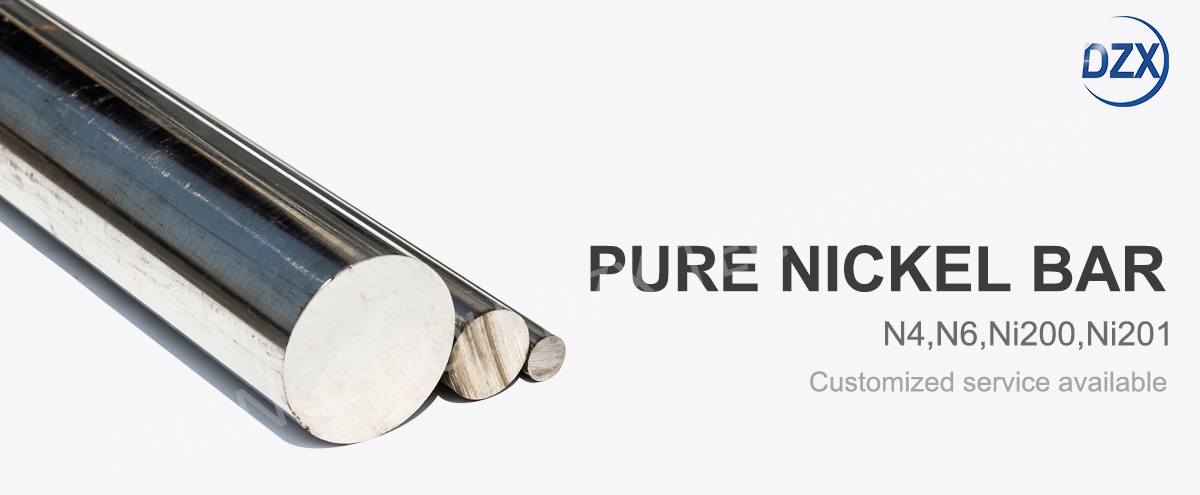
Covers nickel bar for electronics in four grades: Ni200 (UNS N02200) and Ni201 (UNS N02201) for general and higher-temperature service, plus N4 (≥99.9%) and N6 (≥99.5%) where purity has to be documented on the certificate. Electronic and electrical buyers use it for vacuum-device parts, low-power contacts, plating anodes and connectors. Annealed round bar in 8 mm, 10 mm, 12 mm and 20 mm is held in stock; other diameters are produced from 3 mm to 300 mm to drawing, and each lot ships with a mill test certificate (EN 10204 3.1) recording the lot composition and mechanicals.
Specifications
| Form | Round Bar / Rod |
| Grades | Ni200 (UNS N02200) / Ni201 (UNS N02201) / N4 / N6 |
| Standard In-Stock Diameters | 8 mm / 10 mm / 12 mm / 20 mm |
| Other Diameters | 3-300 mm per drawing |
| Length | Per drawing (bar program supports up to 6000 mm) |
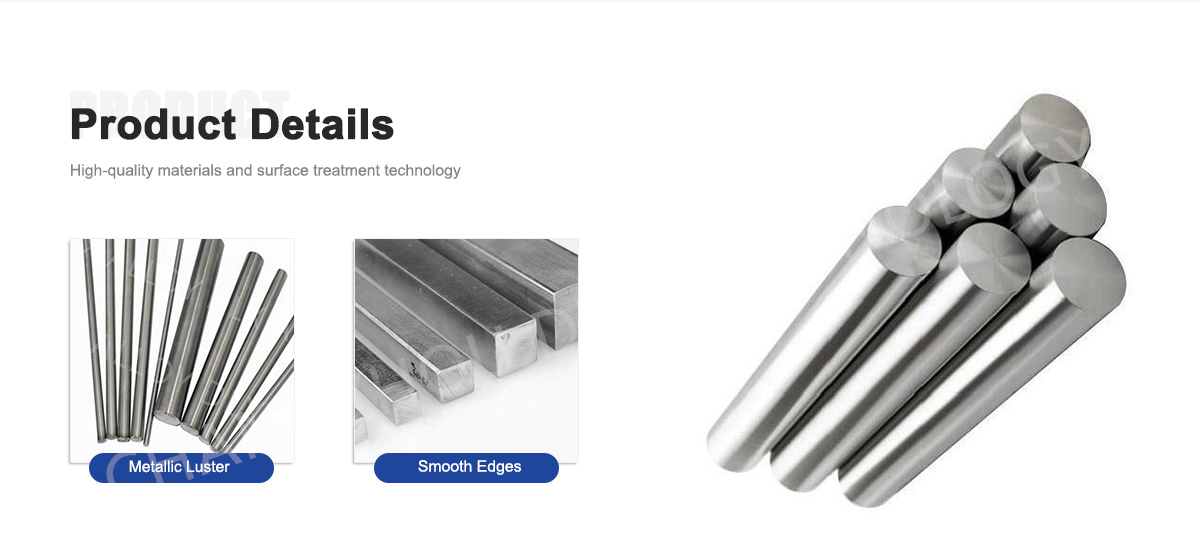
| Surface | Black / Peeled / Polished / Cold Drawn (Bright) |
| Temper | Annealed (standard) |
| Density | 8.908 g/cm³ |
| Tensile Strength (min) | 462 MPa (annealed) |
| Yield Strength 0.2% (min) | 148 MPa (annealed) |
| Elongation (min) | 35% |
| Melting Point | 1435-1446°C |
Non-stock surfaces and sections beyond this table sit in the pure nickel bar program.
Key Strengths
Four grades on one bar order: Ni200/Ni201 (UNS) and N4/N6 (GB), with grade purity documented per lot.
N4 bar at ≥99.9% for vacuum-device and precision electrical parts.
Electronic duty in proven applications: vacuum-device components, relay contacts, plating anodes and connectors.
Annealed 8-20 mm held in stock; non-stock diameters and cut-to-length produced to drawing.
Lot-numbered mill certificates for incoming inspection.
Technical Details
Where Nickel Bar Fits in Electronic and Electrical Duty
Nickel's electronic roles are specific. Vacuum-device parts use the high purity of the pure nickel series, where N4 reaches 99.9% and the metal serves in sealed tubes and instruments. Relay and switch contacts draw on stable contact behaviour under modest loads. In electrochemistry, bar is machined into plating anodes and battery-related parts, and the same material becomes connectors and structural hardware where corrosion resistance decides service life.
Outside Pure Nickel's Range: Heaters, Precision Resistors and Thermistors
Precision resistors are made from controlled alloys such as manganin and constantan, and resistance heating belongs to NiCr and FeCrAl. NTC thermistors are metal-oxide ceramics. Pure nickel's resistivity of 0.096 μΩ·m places it among conductors. Controlled-expansion matching to semiconductor packages belongs to the Kovar-type alloys, whose thermal expansion is built to sit close to glass and ceramic seals.
Matching Grade to the Electronic Part
The part decides the grade. Sealed tubes, vacuum instruments and precision contacts take N4 (≥99.9%) or N6 (≥99.5%) under GB/T 4435, where lower total impurities matter more than strength. Contacts, connectors, anodes and structural hardware run on Ni200 (UNS N02200, ≥99.2%). Where a part is assembled at temperature, the low-carbon grade Ni201 holds carbon to 0.02% so carbides stay out of the grain boundaries over service. All four are commercially pure nickel, and the certificate names the grade the lot was made to.
Specifying Rod for Electronic Duty
Specification starts with form: stocked round bar ships on the diameters held in stock, and the drawing covers non-stock diameters with the surface chosen from black, peeled, polished and cold drawn bright. For electronic applications the certificate carries equal weight. The mill test certificates (EN 10204 3.1) record lot composition and mechanicals, so an N4 order arrives at 99.9% with the batch number traceable through incoming inspection.
Chemical Composition
| Grade | Ni+Co (min) | C (max) | Cu (max) | Fe (max) | Mn (max) | Si (max) | S (max) |
|---|
| N4 | 99.9% | 0.01% | 0.015% | 0.04% | 0.002% | 0.03% | 0.001% |
| N6 | 99.5% | 0.10% | 0.10% | 0.10% | 0.05% | 0.10% | 0.005% |
| Ni201 (UNS N02201) | 99.0% | 0.02% | 0.25% | 0.40% | 0.35% | 0.35% | 0.01% |
| Ni200 (UNS N02200) | 99.2% | 0.15% | 0.25% | 0.40% | 0.35% | 0.35% | 0.01% |
Mechanical & Physical Properties
Annealed bar: tensile strength ≥462 MPa, 0.2% yield strength ≥148 MPa, elongation ≥35%, hardness 90-120 HB. Physical constants: density 8.908 g/cm³, melting point 1435-1446°C, thermal conductivity (Ni200) 70.2 W/m·K, electrical resistivity 0.096 μΩ·m, coefficient of thermal expansion ≈13.3 µm/m·K (typical), ferromagnetic below the Curie point of 358°C.
Quality Assurance
Certificates travel with the shipment and state the actual composition and mechanicals of the lot, with ASTM B160 and GB/T 4435 references for incoming inspection. Inspection records are kept per heat for traceability.

Applicable Standards
Ni200/Ni201: ASTM B160 (Nickel Rod and Bar), UNS N02200/N02201. N4/N6: GB/T 4435. Export documentation per EN 10204 3.1.

References
Material data references ASTM B160; corrosion and physical property data reference ASM Specialty Handbook: Nickel, Cobalt, and Their Alloys and standard engineering sources; batch-level composition and mechanicals are verified against mill test certificates and in-house inspection records.
Packaging & Delivery
Bar is supplied in bundles with protective wrapping, packed in export wooden cases labeled with the grade and the lot number. In-stock diameters dispatch in 3-7 days; standard production runs 7-15 days, and sizes beyond stock in 15-30 days per drawing. Freight is quoted to the destination port. Payment by L/C, T/T, Western Union or MoneyGram.

About DZX Alloy
Electronic and electrical buyers come to DZX Alloy's Changzhou, Jiangsu mill for grade purity documented per lot: N4 at 99.9%, Ni200 at 99.2%, each lot numbered on an EN 10204 3.1 mill certificate. Under ISO 9001 and SGS quality systems since 2002, with bar exported to 60+ countries, the same controls apply whether the order is one bar for a prototype or a container for production.
Send the drawing and required grade for a confirmed quote on size, purity class and delivery.

FAQ
Q: What is nickel bar used for in electronics?
A: Vacuum-device parts, low-power contacts in relays and switches, plating anodes, and connectors and hardware where corrosion resistance matters.
Q: What is the difference between N4 and Ni200?
A: Purity. N4 (GB/T 4435) is ≥99.9%, the highest-purity option for vacuum and precision parts; Ni200 (UNS N02200) is ≥99.2% and covers general service. The mill certificate records the grade of your lot.
Q: Can pure nickel rod be used for resistors or thermistors?
A: No. Precision resistors use manganin or constantan, resistance heating uses NiCr or FeCrAl, and NTC thermistors are ceramic oxides. Its 0.096 μΩ·m resistivity makes pure nickel a conductor, and those functions belong to other material families.
Q: Which grades are available?
A: Ni200 (UNS N02200), Ni201 (UNS N02201), N4 and N6, all four on bar with purity documented per lot.
Q: What export documents do you provide?
A: EN 10204 3.1 mill test certificates recording the lot chemistry and mechanicals, with ASTM B160 / GB/T 4435 references for incoming inspection.
Q: What is the minimum order quantity?
A: MOQ is 10 kg.
Q: How is pricing determined?
A: Quoted by grade and quantity once the specification is received.
Q: What payment terms are accepted?
A: L/C, T/T, Western Union and MoneyGram.


