ISO 9001 & SGS Certified | EN 10204 3.1 Certificates | 8-20 mm In Stock
Nickel 200 rod and bar in Ni200 (UNS N02200) and Ni201 (UNS N02201) is specified for heat-transfer parts in chemical service: it conducts heat several times better than stainless steel while surviving the caustic and reducing media that corrode copper and aluminum. Annealed rod in 8 mm, 10 mm, 12 mm and 20 mm is held in stock, with other diameters produced from 3 mm to 300 mm to drawing and lengths to 6000 mm. Each lot ships with a mill test certificate (EN 10204 3.1).
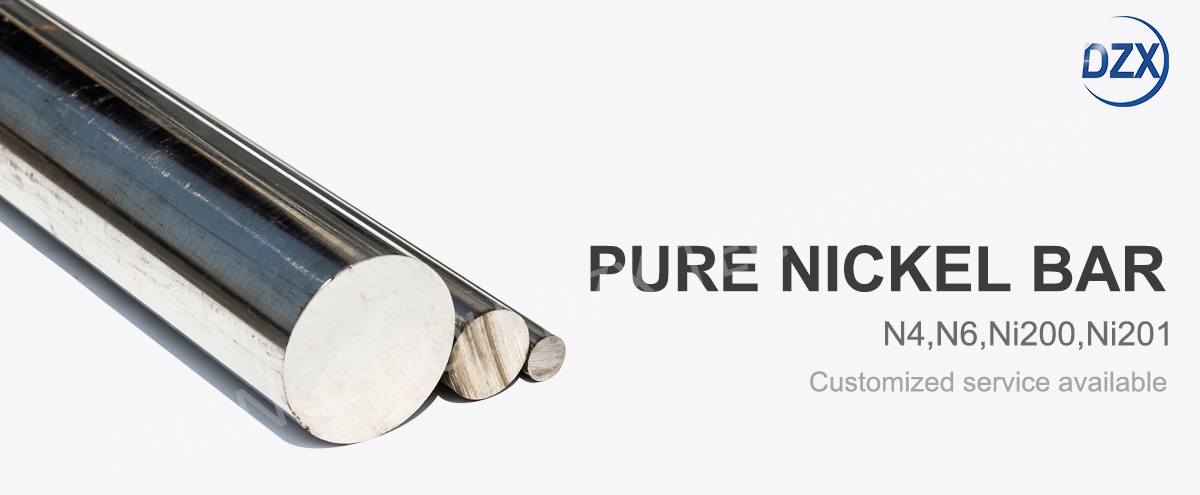
Thermal Conductivity in Perspective
Ni200 conducts heat at 70.2 W/m·K at room temperature, roughly four times the value of stainless steel and above most corrosion-resistant alloys, with a modest decline as temperature rises. Copper (about 400 W/m·K) and aluminum (about 237 W/m·K) conduct more, but neither survives caustic or reducing process media. For heat transfer in those media, the selection rests on the bar's combination of conductivity and corrosion resistance, and the section is then sized against the heat load.
Specifications
| Form | Round Bar / Rod (hexagonal and square per drawing) |
| Grades | Ni200 (UNS N02200) / Ni201 (UNS N02201) |
| Standard In-Stock Diameters | 8 mm / 10 mm / 12 mm / 20 mm |
| Other Diameters | 3-300 mm per drawing |
| Length | Per drawing (bar program supports up to 6000 mm) |
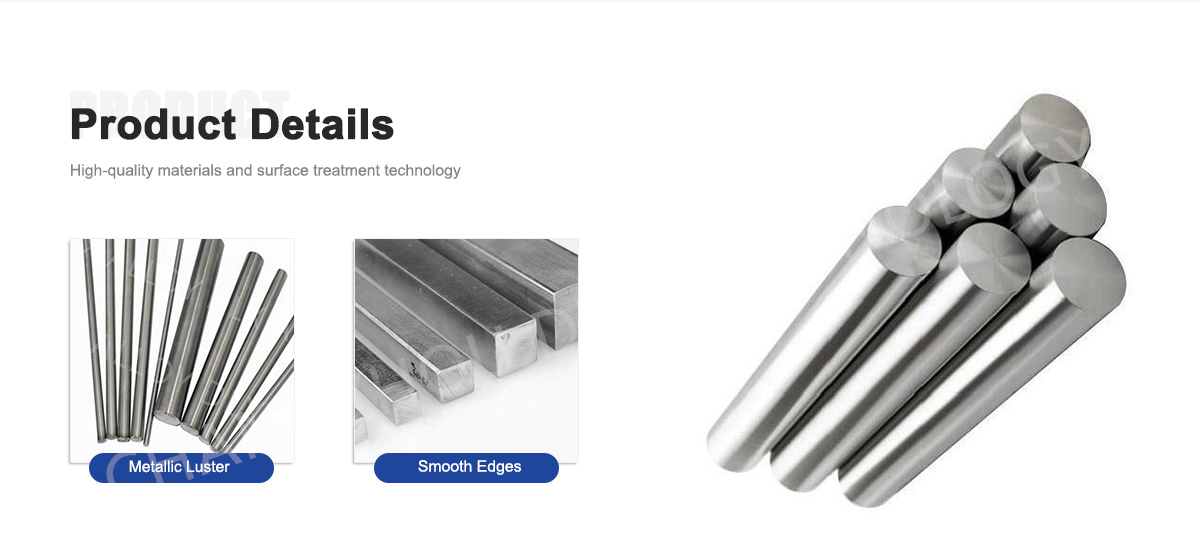
| Surface | Black / Peeled / Polished / Cold Drawn (Bright) |
| Temper | Annealed (standard) |
| Density | 8.908 g/cm³ |
| Tensile Strength (min) | 462 MPa (annealed) |
| Yield Strength 0.2% (min) | 148 MPa (annealed) |
| Elongation (min) | 35% |
| Melting Point | 1435-1446°C |
Sections beyond round, and the surface states in the table, are produced under the pure nickel bar program.
Key Strengths
Conducts heat about four times better than stainless steel at room temperature.
Survives the caustic and reducing media that corrode copper and aluminum.
Ni200 for general thermal service; Ni201 (C ≤0.02%) where service temperature runs high.
Annealed 8-20 mm rod in stock; 3-300 mm and lengths to 6000 mm to drawing.
Mill certificates recording lot composition and mechanicals.
Technical Details
Section Size and Heat Flow
Heat flow along a bar follows its cross-section, so diameter sets capacity: at the same temperature gradient a 20 mm rod moves about four times the heat of a 10 mm rod, and a 10 mm rod about 1.6 times an 8 mm one (calculated from nominal area). Surface state does not enter that calculation, since thermal properties belong to the metal itself, and that conductivity applies to black, peeled, polished and cold drawn bar. Section size follows the heat load; the surface is ordered for the machining operation.
Heat Exchange and Thermal Parts
Nickel rod and bar appear as machined heat-transfer components in chemical and process plants: exchanger internals, heater and immersion parts, thermal fittings, and sensor housings. The trade-off is straightforward, since nickel is chosen where corrosion rules out the better conductors and the section is sized for a lower but dependable conductivity. Media, temperature and service conditions belong in the enquiry, and those inputs also decide the section and the finish.
Grades and Surface for Thermal Duty
Ni200 is the standard choice for thermal components in chemical service. Ni201 takes those parts above roughly 315°C, where its 0.02% carbon limit avoids the grain-boundary precipitation that carbon can cause in Ni200 at temperature. Peeled or bright bar suits tight machined features and black bar suits parts machined all over, so the surface is ordered against the machining operation.
Data and Certificates for Thermal Design
Heat-transfer calculations need documented numbers, and the lot certificate supplies them: composition and mechanicals on the mill test certificate (EN 10204 3.1), with conductivity and physical data referenced to the ASM Specialty Handbook and standard engineering sources. Grade selection is confirmed against the service temperature, and N4 or N6 purity equivalents are quoted on request under GB/T 4435 where a drawing calls for them.
Chemical Composition
| Element | Ni200 (UNS N02200) | Ni201 (UNS N02201) |
|---|
| Ni+Co (min) | 99.2% | 99.0% |
| C (max) | 0.15% | 0.02% |
| Cu (max) | 0.25% | 0.25% |
| Fe (max) | 0.40% | 0.40% |
| Mn (max) | 0.35% | 0.35% |
| Si (max) | 0.35% | 0.35% |
| S (max) | 0.01% | 0.01% |
Mechanical & Physical Properties
Annealed bar: tensile strength ≥462 MPa, 0.2% yield strength ≥148 MPa, elongation ≥35%, hardness 90-120 HB. Physical constants: density 8.908 g/cm³, melting point 1435-1446°C, thermal conductivity (Ni200) 70.2 W/m·K, electrical resistivity 0.096 μΩ·m, coefficient of thermal expansion (Ni200) ≈13.3 µm/m·K, ferromagnetic below the Curie point of 358°C.
Quality Assurance
Each batch is checked before shipment: composition by spectral analysis, mechanicals by tensile and hardness testing, and dimension and surface by calibrated inspection against the grade standard. Mill test certificates (EN 10204 3.1) record the results, and the lot number identifies the heat the bar came from.

Applicable Standards
Ni200/Ni201: ASTM B160 (Nickel Rod and Bar). Export documentation per EN 10204 3.1. N4/N6 Chinese-grade equivalents follow GB/T 4435 on request.

References
Material data references ASTM B160; thermal conductivity values reference ASM Specialty Handbook: Nickel, Cobalt, and Their Alloys and standard engineering data for comparative metals; batch-level composition and mechanicals are verified against mill test certificates and in-house inspection records.
Packaging & Delivery
Bar is supplied in bundles with protective wrapping, packed in export wooden cases marked with grade and lot number. In-stock diameters dispatch in 3-7 days, standard production in 7-15 days, and sizes to drawing in 15-30 days. Shipping is quoted per destination, and payment is by L/C, T/T, Western Union or MoneyGram.

About DZX Alloy
DZX Alloy has melted and processed nickel-based material in Jiangsu, China since 2002 under ISO 9001 and SGS quality systems, exporting to 60+ countries. Thermal-component orders are quoted with grade selection confirmed against the service temperature, and conductivity figures are referenced to the standard engineering sources named above.
Submit your drawing and quantity for a confirmed quote on grade, section and delivery.

FAQ
Q: What is the thermal conductivity of this nickel rod?
A: Ni200 conducts 70.2 W/m·K at room temperature, about four times stainless steel, with a modest decline as temperature rises. Copper and aluminum conduct more, but corrode in the media where nickel is specified.
Q: How does diameter affect heat flow along the bar?
A: Heat flow follows the cross-section. At the same temperature gradient a 20 mm rod moves about four times the heat of a 10 mm rod, and a 10 mm rod about 1.6 times an 8 mm one.
Q: Does surface finish change thermal performance?
A: No. Conductivity belongs to the metal, so one value applies across every surface state. Finish is ordered for the machining operation.
Q: Which grades are used for heat-transfer parts?
A: Ni200 (UNS N02200) covers general heat-transfer service, and Ni201 (UNS N02201) covers those parts above roughly 315°C.
Q: What rod sizes do you produce?
A: 8 mm, 10 mm, 12 mm and 20 mm from stock; other diameters from 3-300 mm and lengths to 6000 mm are produced per drawing.
Q: How is the bar certified for a thermal design file?
A: Each shipment carries an EN 10204 3.1 mill test certificate with lot composition and mechanicals, and conductivity figures are referenced to the ASM Specialty Handbook and standard engineering data.
Q: What is the minimum order quantity?
A: MOQ is 10 kg.
Q: What is the delivery time?
A: 3-7 days for in-stock diameters, 7-15 days for standard production, and 15-30 days for sizes produced to drawing.
Q: How do I get a price?
A: Send the drawing, grade, diameter and quantity; the quote states grade, surface, quantity and delivery.
Q: What payment terms are accepted?
A: L/C, T/T, Western Union and MoneyGram.


