High conductivity nickel plated copper strip is a core composite conductive material independently produced by DZX, tailor-made for mass-produced electronic terminals, terminal connectors and power connection components. The product adopts high-purity T2 oxygen-free copper as the conductive substrate, matched with our proprietary continuous electroplating nickel process, forming a compact, uniform nickel protective layer on both sides of copper base metal without pinholes, peeling or uneven plating thickness, balancing ultra-high electrical conductivity and long-term environmental resistance at the same time.
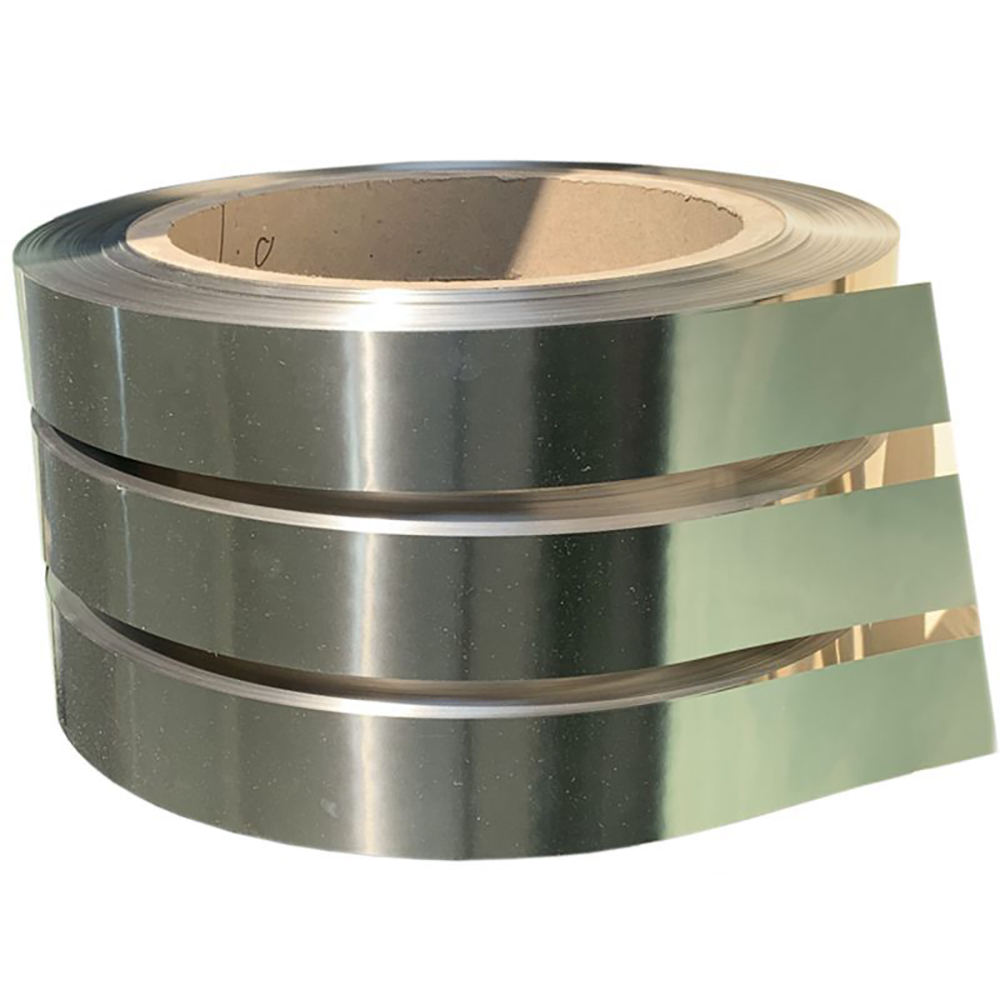
Most raw copper strips on the market only focus on single conductivity, while pure nickel strips carry obvious resistance loss under high current load. DZX’s nickel plated copper strip solves this industry trade-off pain point fundamentally: the copper core retains 95%+ IACS conductivity close to bare copper, and the dense nickel plating layer acts as an isolation barrier to block air oxidation, salt fog corrosion and galvanic corrosion between dissimilar metals. Our production line realizes full-process closed-loop control from copper blank rolling, surface micro-etching, electroplating, annealing to precision slitting, and all finished materials pass 100% offline performance testing before delivery, supporting stable mass supply for automotive electronics, energy storage, consumer electronics and industrial control terminal manufacturers.
Different from ordinary batch electroplating processing, DZX applies low-stress nickel plating formula. The plating layer forms metallurgical adhesion with copper substrate, which will not fall off during terminal stamping, bending and repeated plug-in cycles. The strip maintains stable tensile ductility after low-temperature annealing treatment, suitable for automated stamping of ultra-thin mini terminals without cracking edge burrs. All specifications comply with RoHS, REACH and IATF 16949 industrial standards, eliminating hidden risks of terminal circuit failure caused by unqualified plating materials.
Main Application Scenarios
The material’s dual advantages of high conductivity and anti-corrosion make it irreplaceable for electronic terminal manufacturing, covering four major downstream industrial tracks with clear market growth demand:
New energy power terminals: Lithium battery pack connecting terminals, energy storage cabinet busbar terminals, EV wiring harness terminals, portable power station contact shunts. Long-term high-current discharge requires low resistance and anti-humidity oxidation, which bare copper cannot meet for outdoor energy storage equipment.
Automotive electronic terminals: ECU internal connector terminals, new energy vehicle charging pile terminals, sensor spring terminals, automotive relay contact pieces. Vehicle working conditions involve alternating high-low temperature and salt fog from road splashing, demanding stable contact resistance for over 10 years of service life.
Consumer electronics precision terminals: Notebook battery terminals, power adapter plug terminals, smart home switch contact terminals, wearable device miniature conductive terminals. Miniaturized terminal design needs thin, bendable conductive strips with consistent welding performance.
Industrial control & communication terminals: PLC module terminals, server cabinet power bus terminals, 5G base station signal connecting terminals, medical equipment circuit terminals. Indoor industrial environments have long-term dust and slight chemical volatile corrosion, requiring no resistance drift after thousands of plug-ins.
Global electronics manufacturing trends push terminal miniaturization and high-power integration, which directly raises market demand for DZX high conductivity nickel plated copper strip. The industry forecast shows that the demand for composite conductive strips for electronic terminals will grow at 12.7% annual compound rate from 2026 to 2030, and single metal conductive materials will be gradually phased out of mid-to-high-end terminal production lines due to reliability defects.
Real-World Industrial Problems of Conventional Conductive Strips
We have accumulated thousands of after-sales feedback from terminal manufacturers, summarizing five core failure problems caused by inferior non-DZX conductive strips in mass production and actual use:
Rapid oxidation resistance rise of bare copper strips: After 2–4 weeks of warehouse storage or damp working environment, copper surface generates black oxide scale, contact resistance surges by 0.2–0.4mΩ, leading to terminal overheating, voltage drop and even circuit burnout during high-current operation.
Uneven nickel plating layer of low-cost plated strips: Local thin plating or pinholes appear on the strip surface; salt spray test fails within 24 hours, corrosion penetrates the copper base, causing intermittent terminal signal disconnection after long-term vehicle operation.
Plating peeling during stamping and bending: Ordinary electroplating lacks pre-treatment micro-etching process; when manufacturers stamp curved terminals, nickel layer flakes off, exposed copper quickly rusts and destroys welding points.
High overall resistance of pure nickel strips: Conductivity only reaches 25% IACS; under continuous 50A+ current load, terminals generate excessive heat, limiting application in power battery and automotive high-power terminals.
Unstable batch performance consistency: Small processing factories adopt discontinuous electroplating, with fluctuating plating thickness between production batches. Terminal manufacturers need frequent adjustment of spot welding parameters, increasing production reject rate and labor testing cost.
All these common failure issues can be completely avoided by switching to DZX standardized nickel plated copper strip, as we build full-process parameter monitoring to lock plating thickness, copper purity and mechanical property fluctuation within ultra-narrow tolerance ranges.
Core Parameter Interpretation
For terminal manufacturing engineers without professional material background, we interpret key technical parameters that directly determine terminal service life and electrical performance:
IACS Conductivity: International Annealed Copper Standard, DZX finished products maintain 94–96% IACS, only 4–6% lower than pure copper, far exceeding pure nickel strip’s 22% IACS. Higher conductivity means lower heat loss under equal current load.
Nickel Plating Thickness: DZX adjustable range 1–10μm, standard electronic terminal specification 3–5μm. Thinner plating cannot resist salt fog erosion; over-thick plating increases overall resistance and weakens spot welding stability.
Tensile Strength & Elongation: Soft temper strip elongation ≥30%, suitable for deep bending small terminals; hard temper tensile strength 400–520MPa, for high-cycle plug-in spring terminals.
Salt Spray Resistance: Standard DZX products pass 72-hour neutral salt spray test without corrosion points, core automotive customized versions support 200-hour salt fog compliance.
Base Copper Purity: T2 oxygen-free copper, copper content ≥99.90%, low impurity content avoids local hot spots under high-frequency current.
Dimensional Tolerance: Thickness tolerance ±0.003mm, width tolerance ±0.02mm, burr-free edge slitting, matching automated terminal stamping machine feeding requirements.
Material Parameter Comparison Table
| Performance Index | DZX High Conductivity Nickel Plated Copper Strip | Bare T2 Copper Strip | Standard Tin-Plated Copper Strip | Pure Nickel Strip |
|---|
| IACS Conductivity | 95% | 100% | 92% | 22% |
| 48h Neutral Salt Spray Result | No oxidation spot | Severe tarnish | Slight surface discoloration | No corrosion |
| Average Contact Resistance Drift (Monthly, 70%RH Humidity) | +0.01mΩ | +0.22mΩ | +0.08mΩ | +0.005mΩ |
| Spot Welding Stability (Continuous 10,000 Welds) | Stable joint, no cracking | Oxide blocks welding | Tin layer melts easily under high temperature | High energy consumption for welding |
| Maximum Continuous Carrying Current (0.3mm×10mm Strip) | 65A | 68A | 60A | 22A |
| Anti-Peel Test After 90° Bending 20 Times | Zero plating shedding | No coating | Partial tin layer peeling | No coating |
| Long-Term Working Temperature Limit | 260℃ | 180℃ | 160℃ | 300℃ |
| Applicable Terminal Cost Level | Mid-to-high end mass production | Low-end disposable terminals | General consumer electronics terminals | Low-current miniature signal terminals |
DZX Enterprise Advantage Comparison (vs General Material Suppliers)
We compare DZX’s full-chain manufacturing capacity with common third-party processing factories in the industry, highlighting differentiated strengths for electronic terminal customers without naming specific competing brands:
R&D & Independent Production Capacity: DZX owns 8 continuous electroplating production lines and internal material laboratory, with 12 material invention patents for nickel copper composite strips. General suppliers mostly outsource electroplating processes, unable to adjust plating formula according to terminal customer’s unique working condition requirements. Our technical team can optimize nickel layer stress, copper substrate hardness and surface roughness based on customer terminal stamping drawings within 3 working days.
Full-Standard Certification System: DZX holds IATF 16949, ISO9001, ISO14001, RoHS and REACH full certification, each batch of materials delivers complete SGS test reports. Most small processing plants only provide basic raw material certificates, lacking vehicle-grade certification required by automotive terminal manufacturers.
Ultra-Stable Batch Consistency: We install real-time optical thickness detectors on every production line, 24-hour automatic sampling performance testing. General factories rely on manual sampling, with plating thickness fluctuation over ±1μm between batches, causing customers frequent welding parameter debugging losses.
Flexible Customization Capability: DZX supports one-side plating, partial masking plating, customized width/thickness, pre-slitting small rolls and pre-annealing temper adjustment, with MOQ as low as 50kg for new material trial orders. Conventional factories only produce fixed standard sizes with high MOQ threshold over 500kg.
Professional Terminal Material Technical Support: Our sales engineers all have electronic material engineering backgrounds, providing free material selection suggestions for terminal design stages. Ordinary suppliers only complete product delivery without downstream application technical guidance.
Stable Delivery Cycle: Monthly production capacity reaches 180 tons, raw copper stock sufficient to avoid market raw material price fluctuation delivery delays. Small manufacturers face frequent production suspension due to copper material shortage.
8 Frequently Asked Questions & Complete Answers
FAQ1: What nickel plating thickness should I choose for electronic terminal mass production?
For general consumer electronics terminals, 3μm nickel plating is cost-effective; automotive and outdoor energy storage terminals require 5μm plating for long-term salt fog resistance; high-temperature industrial control terminals can customize 8–10μm thick nickel layers. Our engineers will recommend the optimal thickness based on your terminal’s service environment.
FAQ2: Will DZX nickel plated copper strip affect spot welding efficiency of terminal equipment?
No. Our low-stress nickel layer forms a thin conductive interface during spot welding pulse discharge, forming firm copper-nickel welding joints without extra energy adjustment. Mass customers report 3–5% higher welding yield compared with generic plated strips.
FAQ3: Can the strip be bent and stamped into miniature connector terminals without plating peeling?
Yes. We conduct pre-plating micro-etching and low-temperature annealing treatment to enhance metallurgical adhesion between nickel and copper substrate. After 50 times repeated 90° bending tests, no plating shedding occurs, fully matching automated stamping of micro terminals below 0.5mm thickness.
FAQ4: How long can DZX materials be stored before terminal processing without oxidation?
Sealed anti-rust packaging guarantees 6-month indoor storage without surface oxidation, far longer than bare copper’s 2-week storage limit. For coastal high-humidity factories, we provide additional vacuum anti-corrosion packaging options.
FAQ5: Is DZX nickel plated copper strip compliant with automotive vehicle-grade terminal standards?
All core specifications meet IATF 16949 automotive industry standards, pass 200-hour salt fog, thermal cycle and vibration aging tests, and have cooperated with multiple Tier 1 automotive electronic terminal manufacturers for stable mass supply.
FAQ6: Can we customize special sizes, temper or partial plating patterns for exclusive terminal products?
Full customization is supported. We adjust copper substrate thickness (0.05–5mm), width (5–350mm), soft/hard temper, single-sided plating, local masking plating and pre-cut fixed-length strips according to customer drawings, with low trial order MOQ.
FAQ7: What is the conductivity gap between DZX nickel copper strip and pure bare copper?
Our finished products reach 94–96% IACS conductivity, only 4–6% lower than pure copper strips. In actual terminal high-current operation, the temperature rise difference is less than 3℃ under equal load, while anti-corrosion performance improves by over 10 times.
FAQ8: What after-sales testing support does DZX provide for customers?
We provide free third-party SGS test reports for each delivery batch, and support free laboratory testing of customer incoming materials including conductivity, plating thickness, salt fog resistance and tensile strength if quality doubts arise.
Closing Paragraph
High conductivity nickel plated copper strip has become the standard matching material for mid-to-high-end electronic terminal manufacturing, yet many manufacturers still face troubles of unstable material quality, short terminal service life and uncontrollable production reject rate from generic suppliers. As a professional composite conductive strip manufacturer with full-process independent R&D and production, DZX focuses on solving all material matching pain points of terminal manufacturers from design trial production to mass stable supply.
We can provide customized one-stop material solutions covering plating formula adjustment, dimensional specification optimization, temper matching and packaging scheme design according to your terminal application scenarios, production equipment parameters and long-term reliability requirements. Our technical team will conduct free material performance simulation verification before formal sample delivery to help you reduce terminal failure risks and cut overall production comprehensive costs. Reach out to our team to share your terminal drawings and working condition parameters for tailored material recommendations and sample support.


