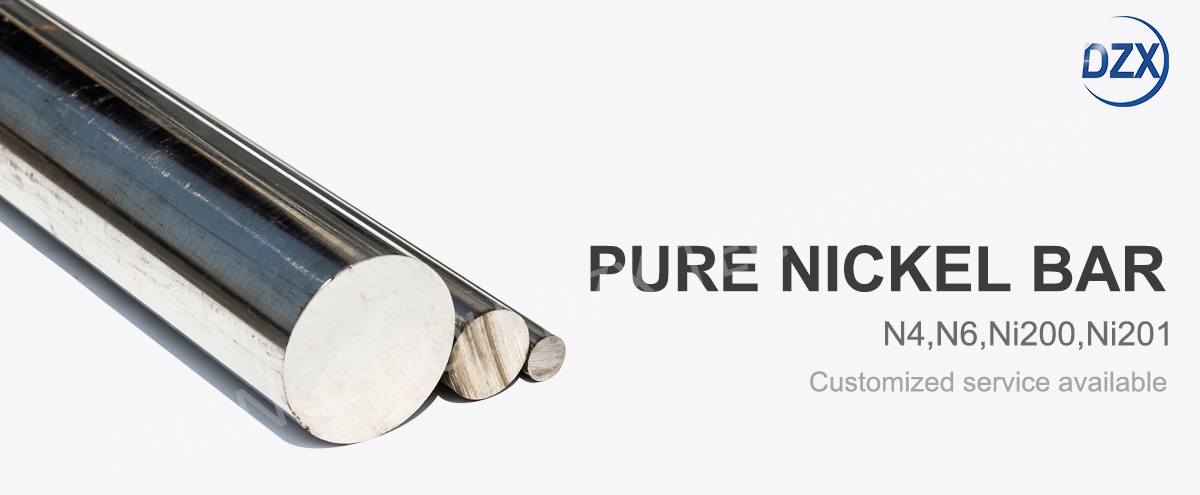
Pure Nickel Anode Bar for Plating – Ni200 Ni201 N4 N6
Pure nickel anode bar in Ni200, Ni201, N4 and N6 for plating lines, straight grade with sulphur capped at 0.01%, annealed, 8-20 mm from stock and 3-300 mm to drawing, cut to the anode length the line runs.
Cut to Anode Length | 8-20 mm In Stock | ISO 9001 & SGS Certified
Nickel anode bar cut from pure nickel stock in Ni200, Ni201, N4 and N6, supplied annealed with sulphur held to 0.01% and no sulphur addition. Round bar is held in 8 mm, 10 mm, 12 mm and 20 mm for short-notice orders and produced from 3 mm to 300 mm to drawing, then cut to the anode length the line runs. Each lot carries a mill test certificate (EN 10204 3.1).
Nickel Bar as Anode Stock: What Changes, What Does Not
A plating line buys the same material that a machine shop buys, and treats it differently. The bar becomes an anode and is consumed into the bath, so the figures that matter are the ones that dissolve with it: the nickel content, the metallic impurities and sulphur. Diameter, length and straightness matter only in as far as the bar has to fit the hooks or the basket the line uses and hold its shape while it is consumed.
What does not change is the specification underneath. All four grades in the pure nickel series are produced to ASTM B160 or GB/T 4435 chemistry, annealed, and certified per heat, so a plating shop ordering anode stock is ordering the same certified material that a fabricator orders for a part, cut to a different length.
Specifications
Use
Anode stock for electroplating and surface finishing lines
Grades
Ni200 (UNS N02200) / Ni201 (UNS N02201) / N4 / N6
Form
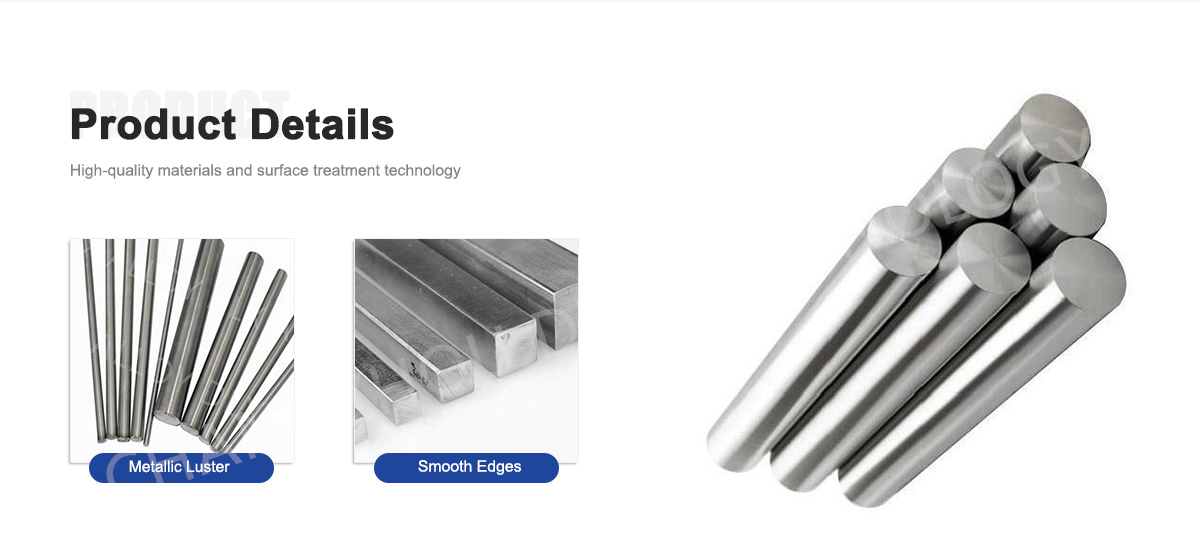
Round Bar / Rod (hexagonal and square per drawing)
Standard In-Stock Diameters
8 mm / 10 mm / 12 mm / 20 mm
Other Diameters
3-300 mm per drawing
Anode Lengths
Cut to the length the plating line uses (bar program supports up to 6000 mm)
Surface
Black / Peeled / Polished / Cold Drawn (Bright)
Temper
Annealed (standard)
Sulphur (max)
0.01%, no sulphur addition
Nickel + Cobalt (min)
99.0% to 99.9%, by grade
Density
8.908 g/cm³
Melting Point
1435-1446°C
Anode stock and machined bar come from the same production route under the pure nickel bar program.
Key Strengths
Straight grade, sulphur capped at 0.01% with no addition.
Cut to the anode length the plating line runs.
Four grades, so bath sensitivity can set the purity class.
Annealed round bar in 8-20 mm held in stock.
Certificate (EN 10204 3.1) issued per heat.
Technical Details
What a Plating Line Wants From the Bar
An anode dissolves, so every element in it eventually reaches the bath. Nickel plus cobalt sets the useful content, and the metallic limits decide whether the anode is suitable for a bath that is sensitive to copper or iron: N4 and N6 are held to 99.9% and 99.5% nickel minimum, while Ni200 and Ni201 are held to 99.2% and 99.0%. Sulphur is the limit that separates anode families, and this material is the straight grade with sulphur capped at 0.01%.
Cutting Anode Lengths From Bar
Bar is cut to the length the line uses, either as single anodes or as lengths that fit a basket, and the bar program supports lengths up to 6000 mm. Cut length and cut squareness are agreed when the order is placed, and the cases are packed to that length so a consignment can be hung without a second cutting operation on site.
Which Grade for a Plating Bath
The choice follows the bath rather than the part. Where the deposit or the bath chemistry is sensitive to metallic impurities, the higher purity classes are the starting point; where a standard purity class is acceptable, Ni200 and Ni201 do the same job. Carbon, which decides grade selection for hot service, is not the limit that sets the choice here, so the deciding figures are nickel content, the metallic limits and sulphur.
Replenishing a Plating Line
Anodes are consumed continuously, which makes them a recurring line item rather than a one-off purchase. The 10 kg minimum suits a top-up order, and a repeat on the same grade and size comes from the same supply route, so the purity class and the certificate format stay consistent from one delivery to the next.
Chemical Composition
Grade
Ni+Co (min)
C (max)
Cu (max)
Fe (max)
Mn (max)
Si (max)
S (max)
N4
99.9%
0.01%
0.015%
0.04%
0.002%
0.03%
0.001%
N6
99.5%
0.10%
0.10%
0.10%
0.05%
0.10%
0.005%
Ni200 (UNS N02200)
99.2%
0.15%
0.25%
0.40%
0.35%
0.35%
0.01%
Ni201 (UNS N02201)
99.0%
0.02%
0.25%
0.40%
0.35%
0.35%
0.01%
Mechanical & Physical Properties
Annealed bar: tensile strength ≥462 MPa, 0.2% yield strength ≥148 MPa, elongation ≥35%, hardness 90-120 HB. Physical constants: density 8.908 g/cm³, melting point 1435-1446°C, electrical resistivity 0.096 μΩ·m, thermal conductivity (Ni200) 70.2 W/m·K, ferromagnetic below the Curie point of 358°C.
Quality Assurance
The heat is analysed at the melt, so the nickel content, the metallic limits and the sulphur figure are known before the bar is drawn. Each lot is then checked at the diameter and the cut length stated on the order, and the mill test certificate issued for the lot reports the chemistry and the mechanical results for the material supplied.
Applicable Standards
Ni200/Ni201: ASTM B160 (Nickel Rod and Bar). N4/N6: GB/T 4435 (Nickel and Nickel Alloy Bars). Export documentation per EN 10204 3.1.
References
Material data references ASTM B160 and GB/T 4435; the straight and sulphur-bearing anode families are distinguished in plating practice references, and this material is supplied as the straight grade; corrosion and application guidance references the Nickel Institute and the ASM Specialty Handbook: Nickel, Cobalt, and Their Alloys; batch composition is verified against mill test certificates and in-house inspection records.
Packaging & Delivery
Anode bar is supplied in the cut lengths ordered or as full bars, wrapped against moisture and packed in export wooden cases with the grade and the cut length on the label. In-stock diameters dispatch in 3-7 days, standard production runs in 7-15 days, and diameters produced to drawing ship in 15-30 days. Freight is quoted per destination, and payment is by L/C, T/T, Western Union or MoneyGram.
About DZX Alloy
Nickel-based material has been melted and processed at DZX Alloy's Changzhou, Jiangsu mill since 2002 under ISO 9001 and SGS quality systems, with exports to 60+ countries. Anode stock is drawn from the same heats as machined bar, and the sulphur figure is fixed at the melt rather than adjusted afterwards, which is what keeps a straight-grade order a straight-grade order on every repeat.
Send the grade, the diameter and the anode length for a quote.
FAQ
Q: Which grade is used for plating anodes? A: N4 and N6 where the highest purity is wanted, and Ni200 or Ni201 where a standard purity class suits the bath. The choice follows the bath chemistry rather than the part being plated.
Q: Does the bar contain added sulphur? A: No. This is the straight grade with sulphur capped at 0.01%. Sulphur-bearing anode material is a separate specification and is outside what this bar is produced to.
Q: What form and lengths are supplied for anode use? A: Round bar and rod, annealed, in 8-20 mm from stock, 3-300 mm to drawing, hexagonal or square sections per drawing, and lengths cut to the anode size the line runs, up to 6000 mm.
Q: Can the bar be cut to a fixed length? A: Yes. The cut length is agreed when the order is placed, and the cases are packed to that length.
Q: What documents come with an order? A: A mill test certificate (EN 10204 3.1) stating the heat chemistry and the mechanical results, together with the standard export documentation for the destination.
Q: What is the minimum order quantity? A: MOQ is 10 kg, which suits a top-up order on a running line.
Q: What is the delivery time? A: In-stock diameters dispatch in 3-7 days, standard production in 7-15 days, and diameters produced to drawing in 15-30 days.
Q: How are anode bars packed? A: Wrapped against moisture and packed in export wooden cases with the grade and the cut length on the label, so the cases can be checked against the order before the anodes are hung.
Q: What payment terms are accepted? A: L/C, T/T, Western Union and MoneyGram.
Jiangsu Dzx Technology is a company dedicated to the production and research and development of alloys. Founded in 2002, we initially focused on the production of resistance alloys.