


What are the different grades of nickel wire
 Dec 18, 2024|
 View:722
Nickel wire is one of the most essential materials used in a variety of projects, each of which can greatly impact a part of process. What grades of nickel wire are there? So in this article, we will explore the different grades of nickel wire in addition to its properties, uses, and the importance of selecting the proper grade for success.
Nickel Wire Grading: What is It?
Nickel wire grades are mainly defined by their composition, which controls the mechanical properties, corrosion resistance, and thermal stability. Different grades of these materials have different properties and are clearly suited for specific applications, and having a good idea of the differences is crucial.
Pure Nickel Wire
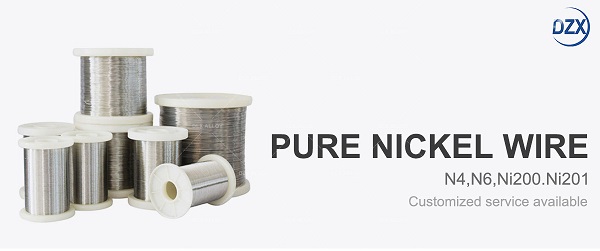
Nickel Wire Pure is a high purity material composed of 99.6% nickel. This alloy range is well-known for its corrosion resistance, especially in alkaline environments. It has an elevated melting point as well as excellent effectiveness electrical and also thermal conductivities, making it fit for the applications in which accuracy as well as stability under utmost conditions are critical.
Aside from corrosion resistance, Pure Nickel Wire can withstand high temperatures without losing its strength, making it the go-to product for extreme conditions. This grade is often used by industries which require high levels of purity, such as electronics and aerospace, due to the predictability and reliability this grade offers.
Pure Nickel Wire is also well adapted for areas with heat transfer due to its high thermal conductivity. Its distinct characteristic enables efficient heat dissipation, which is particularly significant in avoiding overheating of electronic devices.
Uses of Nickel Wire in its Purest Form
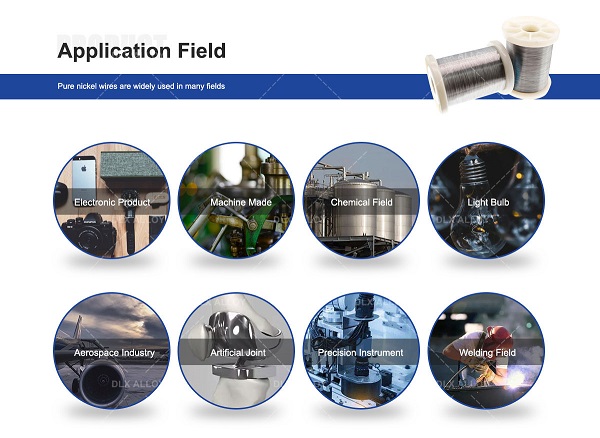
Due to its high conductivity and resistance effect against oxidation, Pure Nickel Wire is widely used in the electronics industry for components like connectors and lead wires. Also, its resistance to corrosion makes it used for chemical processing equipment and marine environments.
Pure Nickel Wire for Coaxial Cables: In telecommunication, one of its applications is in coaxial cables. Its versatility in both marine settings, particularly shipbuilding and offshore drilling, speaks to its saltwater resistance.
Pure Nickel Wire is also used in the medical industry due to its properties, specifically in medical devices and instruments that require high precision and reliability. Due to its biocompatibility, it can be employed for many medical purposes without causing negative reactions.
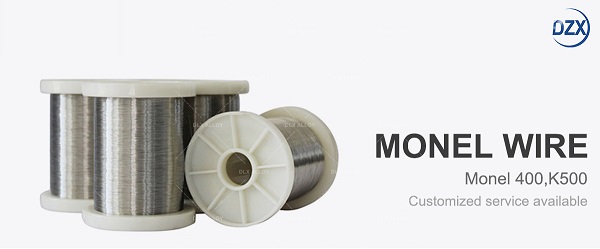
Monel is a nickel-copper alloy that exhibits excellent corrosion resistance in acidic and alkaline environments. Alloying it with copper improves its strength and toughness, allowing it to be used for more strenuous applications than pure nickel.
Due to its excellent mechanical properties, this alloy is often selected in applications where high levels of stress resistance are required. This strength is especially useful in places that require both chemical and physical strength.
The alloy benefits from the novel combination of nickel and copper that improves strength and provides biofouling resistance found in typical marine applications. That makes Monel a good choice for deployments in tough conditions over the long-term.
Nickel-Copper Alloys Applications
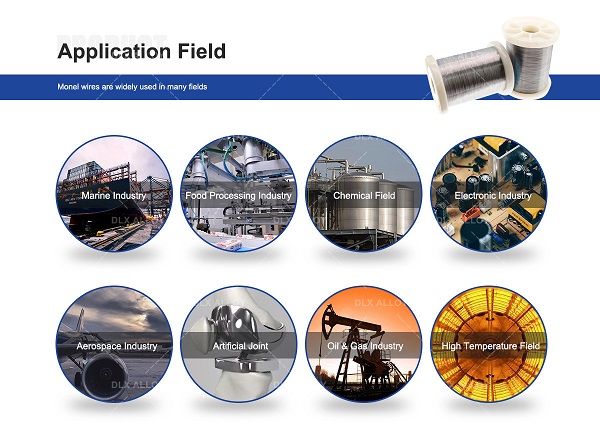
Industries such as marine engineering, chemical processing and oil and gas extraction take advantage of Monel's unique properties. Cobalt-chromium-molybdenum alloy is another excellent material for pump shafts, seawater valves, and chemical plant equipment because of its ability to resist high-pressure and corrosive conditions.
In marine engineering, for example, Monel is used in propeller shafts and underwater pipelines due to its anti-corrosive properties. The oil and gas industry uses Monel for drilling equipment and pipelines, since it resists the harsh underground conditions.
Chemical processing plants use Monel in heat exchangers and pressure vessels, where its durability and resistance to corrosive chemicals minimize maintenance requirements. If you're wondering, its strength and reliability makes it a mainstay in sectors where strength and reliability are likely the most essential requirement.
Nickel-Chromium Alloys (Nichrome)
Nichrome is a nickel-chromium alloy that is known for its high oxidation resistance and its stability at high temperatures. Nichrome's high melting point and superb resistance to heat and corrosion is due to chromium.
In applications where exposure to elevated temperatures is pertinent, this alloy's capacity to withstand high temperatures without a loss of structural integrity makes it a necessity. In honoring the nicrome for its long life and performance in places where heating takes place continuously.
Nickel and chromium together act as thermal resilient for high temperature applications and increases the life span of alloy making them less suitable for replacement in industries. Hence, Nichrome is the most economical option for long-term use.
Nickel-Chromium Alloys and Their Applications
Nichrome also finds common use in many applications where heating elements are needed, such as toasters, hair dryers and even industrial furnaces. It is critical for use in the manufacture of high-temperature parts due to its ability to maintain structural integrity at elevated temperatures.
Nichrome: An alloy used in consumer electronics, Nichrome is most often found as resistor wires or heating wires. But its application in industrial furnaces and kilns emphasizes its ability to provide consistent heat production for long periods.
Nichrome can be made to suit parts of machines that experience heat during the flight, which is part of the aerospace industry. Its durability allows aerospace components to withstand even the harshest conditions for maximum performance.
Nickel-Iron Alloys (Invar)
Invar is a nickel-iron alloy notable for its low thermal expansion. This property is important for applications that demand dimensional stability, even when there are temperature changes.
Unlike other metals, Invar does not change in size and shape with changing temperature, so it is used in precision engineering. Its thermal stress is unparalleled, providing reliability in precision environments where even the subtlest variations are unacceptable.
One of the main reasons why this type of alloy is so commonly used across sectors that have strict precision requirements, such as aeronautics and scientific research, is because it doesn’t expand and contract on account of temperature.-matters. With Invar, you can be confident with the performance in critical applications over a wide temperature range.
Nickel-Iron alloys Applications
Invar is used a lot in precision instruments including clocks and scientific measuring instruments, where changes in dimensions by temperature can cause errors. Its stability also makes it well suited to aerospace components and optical instruments.
In the aerospace sector, Invar's low thermal expansion is applied in the production of both satellite components as well as structural components; stability is a critical factor in determining the success of a mission. Such properties are what Invar Instruments and other scientific laboratories use as precision measurement tool to measure to that accuracy under varying conditions.
In the building of optical instruments, the stability of Invar helps make better telescopes and cameras. Its precise alignment stability renders it reliable in high-precision instruments.
Choosing the right grade of Nickel Wire
Selecting the right grade of nickel wire is determined by many variables including environmental conditions, necessary mechanical properties and budget limits of the application. All of these factors are essential in determining the best grade for any application.
Environmental Conditions
Reverse your engineering and apply it to the surrounding areas of the nickel wire. Temperature, humidity, and exposure to corrosive elements are factors that determine the grade that will withstand these conditions without degrading.
Environmental conditions require knowledge about the exact challenge the wire will encounter, including exposure to chemicals, saltwater, or high altitude. All these are key points that would affect the wire's performance and durability significantly.
In addition, the selection of nickel wire grade should also take into account possible changes in environmental conditions as well as continued effectiveness and durability of the wire as the application moves forward. Because of this, it prevents premature failure and expensive replacements.
Mechanical Properties
50- and 86-grit sandpaper provided the same mechanical properties as coarse and fine ones. Grades vary in strength and ductility, making them more or less suitable for certain applications.
The performance of a nickel wire under stress or load is largely dependent on mechanical properties. Other applications may require high tensile strength while still others focus on flexibility so may require a sturdier grade.
By understanding the mechanical requirements of the application, one can ensure that the grade of nickel wire selected for the application brings forth the physical tolerances needed, to ensure performance. With this knowledge, it is easy to choose a wire that can provide reliability and efficiency.
Cost Considerations
Financial limitations greatly influence the selection of materials. However, it can also be a bit more expensive than high-grade nickel wire, which performs significantly better. It is essential to flexibly balance the performance demands for initial material selection with budgetary constraints.
Often, the factors associated only to cost revolve around the cost of the material, as the initial procurement cost is done by evaluating the eventual yield of the nickel from the variety of outputs that can be achieved by relieving orgin plant of current by getting higher-grade nickel wire which is admittedly at a higher cost. This analysis factors in estimated maintenance costs and the lifespan of the wire.
It is worth considering the consequences of wire failure not only on the execution of the project, but also on project costs, including downtimes and replacements. An informed decision weighs upfront cost against potential future benefit.
Conclusion
Nickel wire is an important material used in many industrial applications, and knowing its various grades is necessary to ensure that optimum performance. Nickel Wires come in various grades like Pure Nickel Wire and others — nickel alloys — Monel and Nichrome, each having specific properties to suit varying applications.
You can then choose the perfect nickel wire grade for your application by considering environmental conditions, mechanical needs, and cost constraints. Understanding the properties of various grades of nickel wire is fundamental to retaining your role as a trusted authority in alloy production and to ensuring that you can propose reliable and high-quality solutions to your customers.
Within this intricate world, selecting the appropriate nickel wire could determine the success of your industrial operations, ensuring efficiency, reliability, and effectiveness. This understanding of the nuances of nickel wire grades enables professionals to make decisions that drive progress and innovation in their respective fields.


