


What Makes Pure Nickel Pipe Special
 Sep 23, 2024|
 View:638
Pure nickel pipe is selected for process equipment where the material's corrosion resistance suits the fluid being handled. Caustic alkali service is an important example. Its ductility and weldability also support fabrication into piping assemblies, provided the design accounts for the material's mechanical properties.
Commercially pure nickel grades used for pipe include Nickel 200 (UNS N02200) and Nickel 201 (UNS N02201). The material designation is only part of the specification. Wall thickness and delivery condition must also suit the operating requirements and the planned fabrication route.
Corrosion Resistance in Suitable Process Media
Pure nickel has strong resistance to caustic alkalis and various reducing chemicals. This makes it useful in selected chemical-processing systems. Resistance to mineral acids varies with concentration and temperature; aeration can also change the corrosion behavior.
Corrosion suitability belongs to a defined process condition. An inquiry should identify the fluid composition and operating temperature, including contaminants that may affect material performance. Oxidizing salt solutions can cause significant attack, so a general reference to saltwater does not establish suitability for seawater service.
For a proposed replacement, provide the existing material and any available service history. Information about where corrosion occurred can help the technical review distinguish general wall loss from attack concentrated at joints or deposits. The selected pipe material should be evaluated against the actual exposure rather than an assumed service-life advantage.
Temperature Performance and Grade Selection
Nickel 200 is normally limited to service below about 315°C because prolonged exposure at higher temperatures can cause graphitization and loss of properties. The lower-carbon Nickel 201 is generally preferred above this threshold. This distinction does not establish a universal maximum temperature for a completed piping system.
The design must consider the load carried at temperature. Continuous operation and brief temperature excursions can impose different requirements. Specify the normal operating condition separately from the design temperature so that the material review uses the correct basis.
Hot chemical service also requires corrosion assessment at the operating temperature. A material that performs satisfactorily in a cool solution may behave differently after concentration or temperature increases. Pure nickel pipe should therefore be selected for a documented process envelope.
Mechanical Properties and Pressure Design
Annealed nickel has good ductility and relatively low hardness. Cold processing changes its strength and forming behavior. These characteristics can support fabrication, but the material name alone does not define the allowable pressure of a pipe.
Pressure capacity depends on the complete piping specification. The design calculation must account for the applicable material properties and dimensions. Connections and any corrosion allowance also need to be included under the governing design rules.
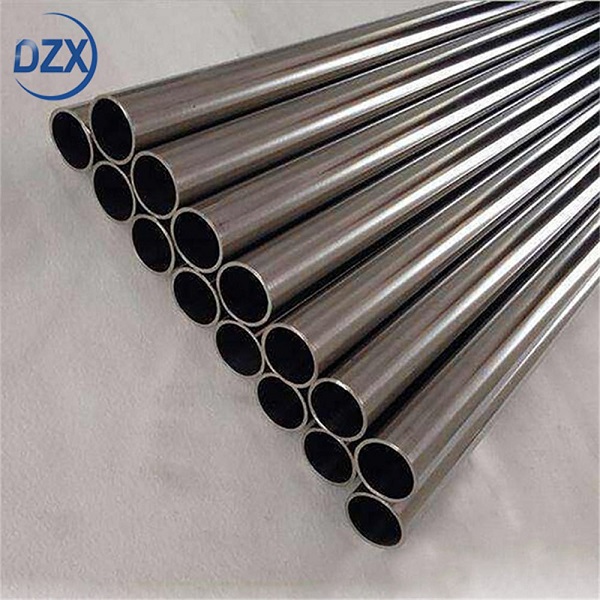
DZX's Pure Nickel Tube category covers tubular material inquiries. Specify whether the dimensions follow a nominal pipe size and schedule or an outside-diameter and wall-thickness drawing. Where the design requires a minimum wall, state that requirement explicitly instead of leaving the wall basis open to interpretation.
For replacement sections, check the mating dimensions before ordering. Matching a stated nominal size does not resolve every installation requirement; the connection details and required end preparation still need to agree with the existing assembly.
Processing Performance and Weldability
Pure nickel can be formed and welded using suitable procedures. Fabrication requires clean surfaces and control of contamination. Welding parameters and filler selection should be established for the actual grade and joint, including protection of the internal weld surface where required.
Bending requirements should be supplied before the pipe is selected. The bend radius and starting wall affect whether the finished bend can meet dimensional acceptance criteria. A fabrication trial may be appropriate where the geometry is demanding or a new process is being introduced.
For welded assemblies, identify whether the supplier is providing straight material, prepared lengths or completed components. This defines responsibility for joint preparation and inspection. The order should also distinguish inspection of the supplied pipe from examination of welds made during installation.
Turning Material Properties into an Order Specification
A quotation should identify the product standard appropriate to the construction. ASTM B161 is relevant to seamless nickel pipe and tube. Heat-exchanger tubing and welded products may require different specifications; the selected standard and edition should be named in the inquiry.
Construction and condition: State whether seamless or welded material is required, together with the specified delivery condition.
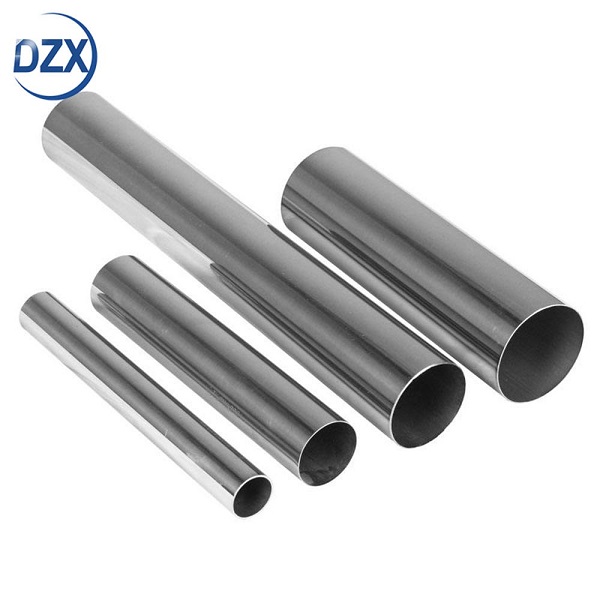
Dimensions and ends: Provide the dimensional drawing or pipe-size designation. Include cut-length tolerances and the required end preparation.
Internal surface: Define cleanliness or surface-finish requirements when the bore will contact a sensitive process stream. Avoid descriptions such as “smooth inside” without an acceptance basis.
Inspection: Agree on required pressure or nondestructive testing under the applicable specification. Identify supplementary examinations separately.
Documentation: Specify the required inspection certificate and ensure the delivered markings can be matched to its material identification.
DZX Supply Support for Pipe Buyers
DZX combines alloy-material supply with precision-processing capabilities, including cutting and machining. For a pipe order, this allows buyers to discuss preparation requirements alongside material selection. The available operations and inspection scope should be agreed against the project drawing.
The company's supply controls include established raw-material supplier relationships and incoming verification. Chemical analysis and mechanical testing are supported by dimensional and visual inspection capabilities. These resources provide a basis for coordinating material acceptance with the buyer's fabrication needs.
For projects with several pipe sizes, submit a line-item schedule showing the quantity required for each section. Identify the installation sequence where deliveries must be staged. Distributors can also specify separate packing by customer order so that material identification remains clear when shipments are divided.
Agree on bore protection and package identification before dispatch. End protection should suit the specified cleanliness requirement, and labels should distinguish items that look similar but have different wall thicknesses. This supports receiving checks before the material reaches the fabrication area.


