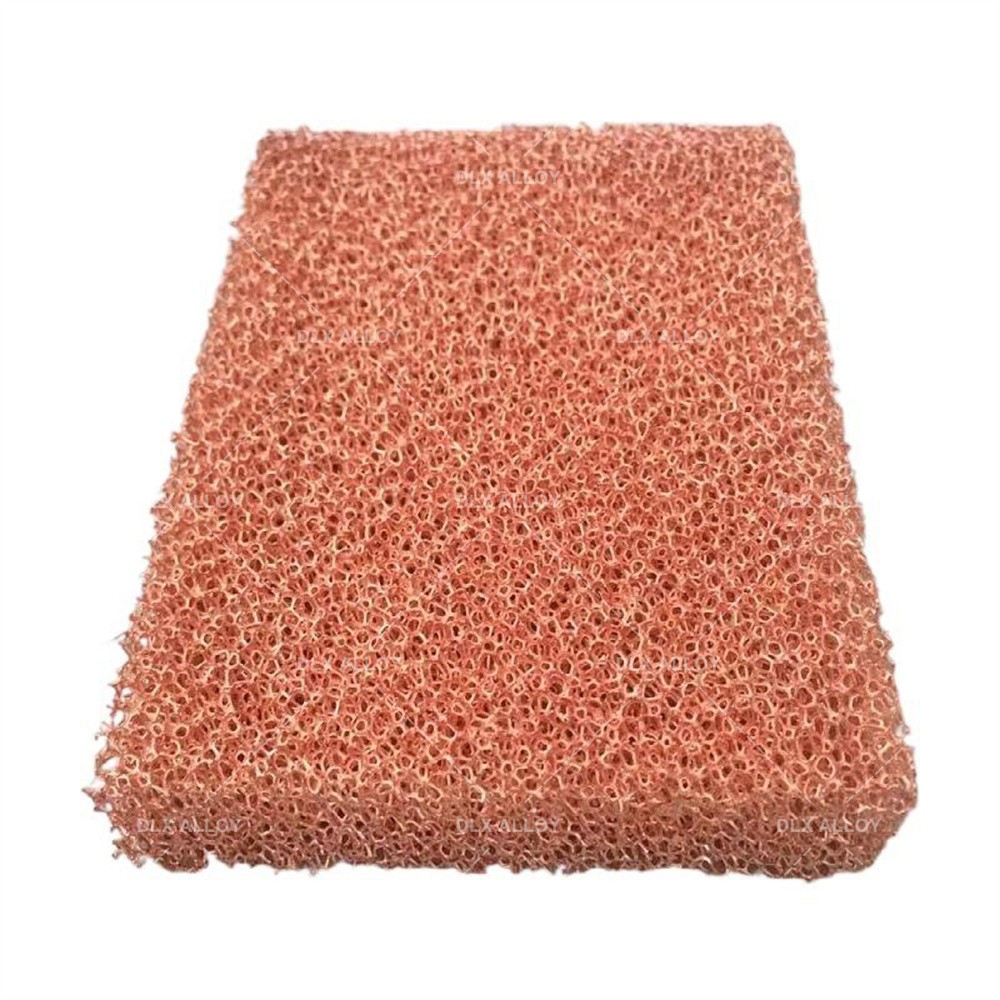
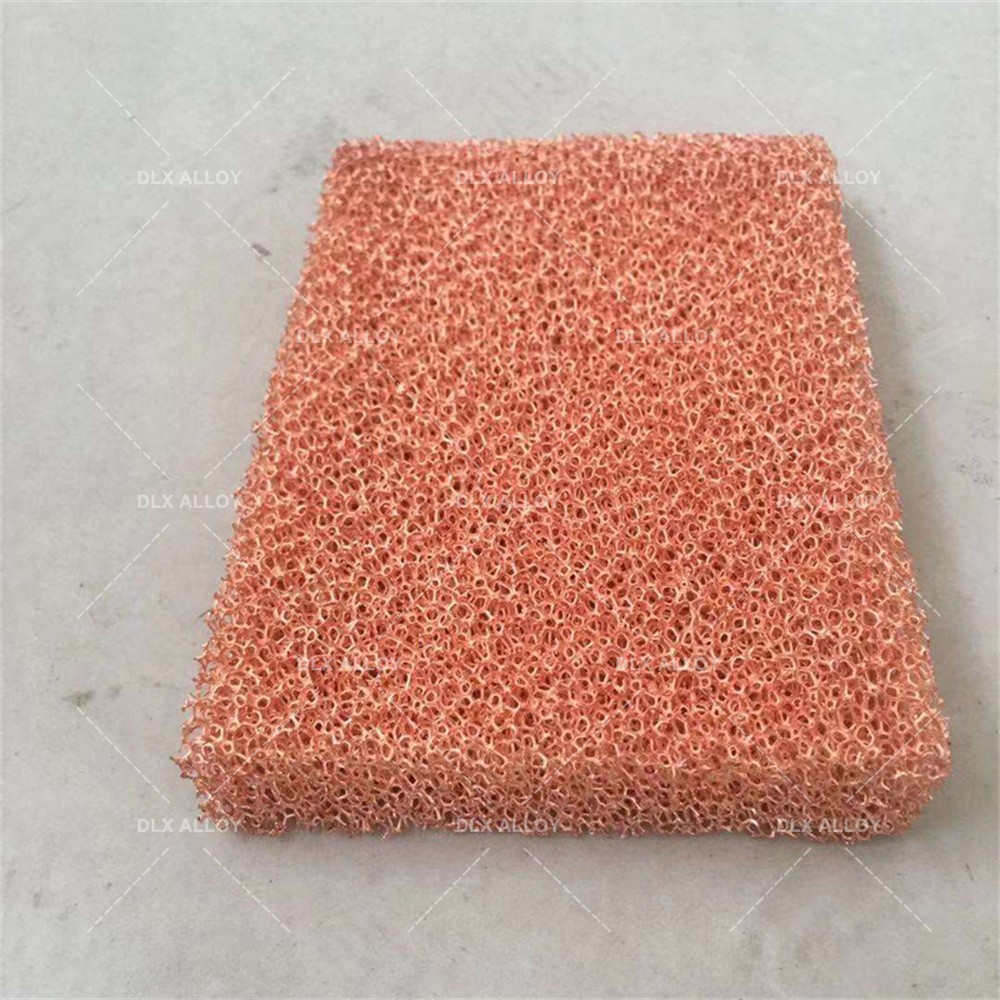
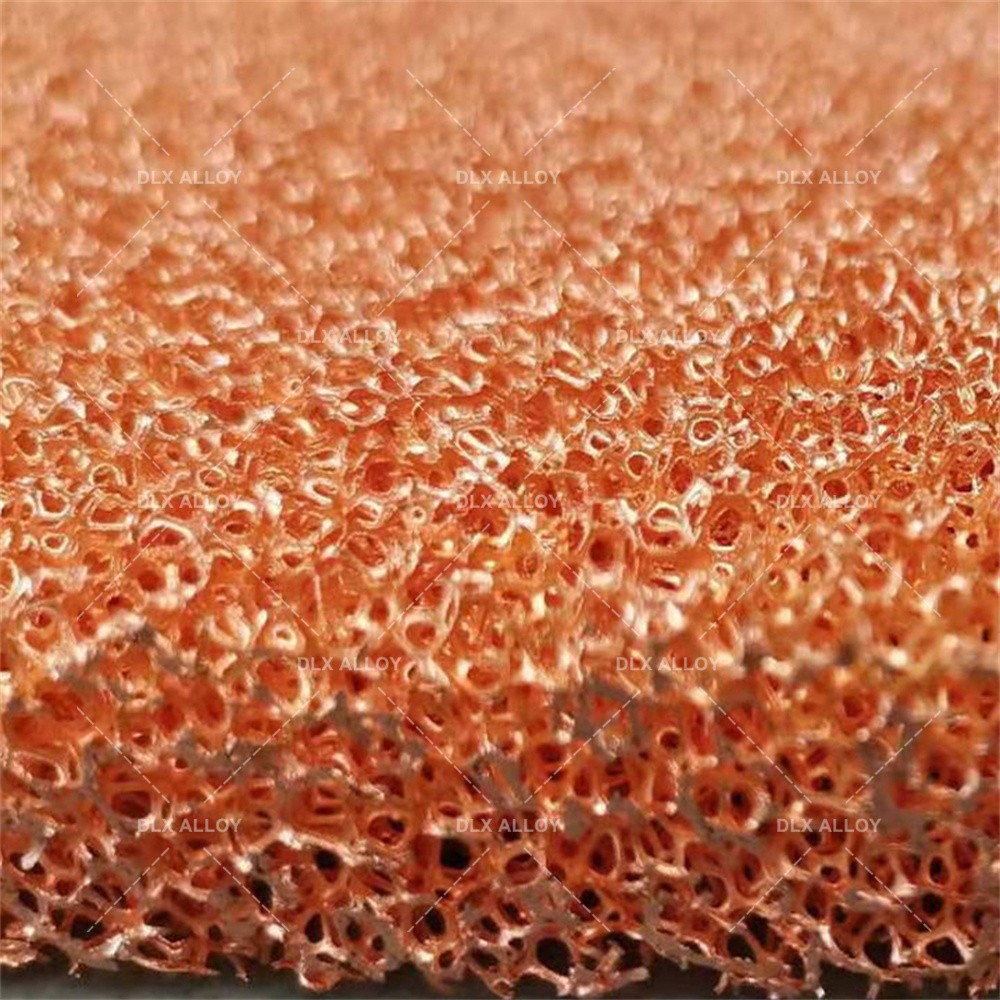
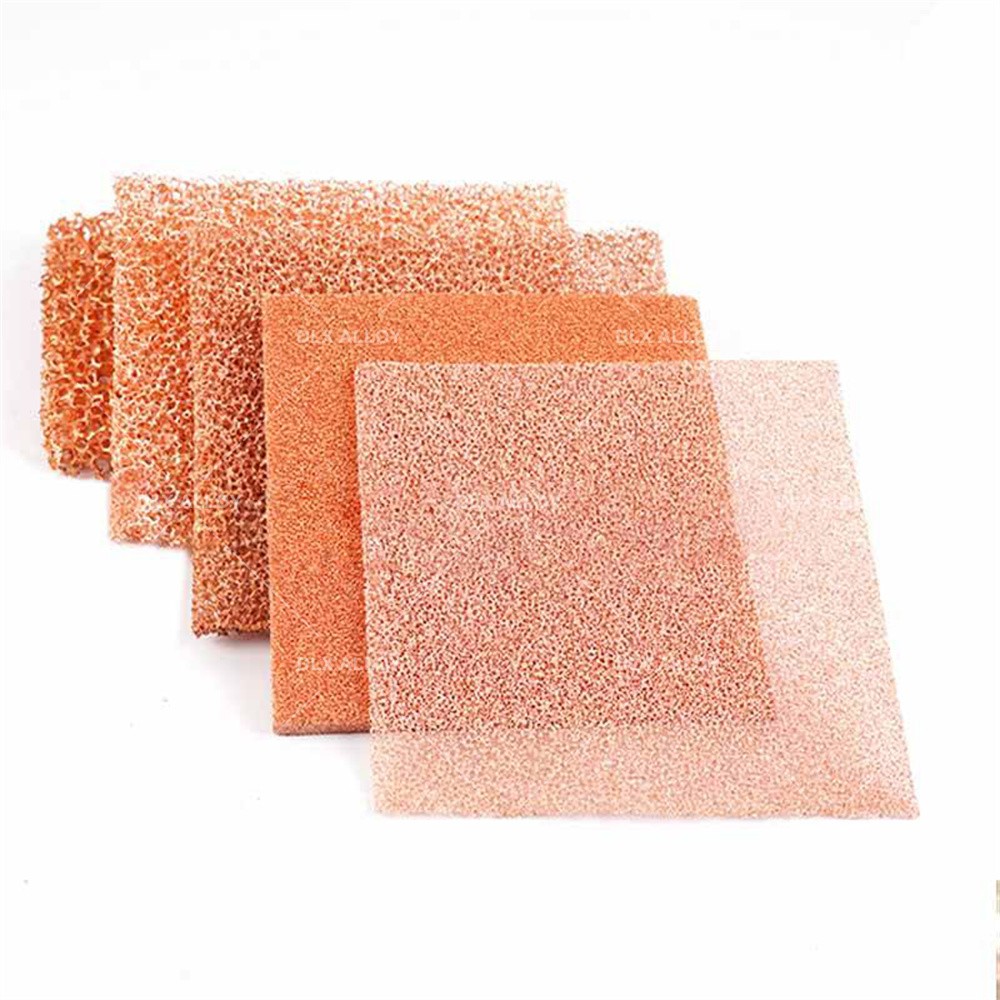
EMI shielding copper foam with 85% porosity represents a breakthrough in electromagnetic interference protection, combining exceptional RF absorption with ultra-lightweight structural properties. This engineered material delivers 85-120 dB shielding effectiveness across critical frequency ranges (1-100 GHz) while weighing 70% less than solid copper enclosures, making it the ideal solution for 5G infrastructure, aerospace systems, and advanced military electronics.
Material Technology Overview
Core Specifications
Porosity: 85% (±2%)
Pore Structure: Gradient-tuned open cells (300-800 μm)
Base Material: Oxygen-free copper (C10100, 99.99% purity)
Surface Resistance: <0.05 Ω/sq
Density: 0.45-0.55 g/cm³
Operating Temperature: -200°C to 400°C
Performance Advantages
✔ Broadband Absorption: 1-100 GHz coverage (including 5G mmWave bands)
✔ Anisotropic Shielding: Directional attenuation up to 120 dB
✔ Vibration Damping: 30% better than solid metal enclosures
✔ Thermal Management: Dual-function EMI shielding/heat dissipation
✔ Conformal Adaptability: Compressible for gasketing applications
Technical Comparison
| Parameter | Copper Foam (85%) | Conductive Coatings | Metal Meshes |
|---|
| Shielding Effectiveness | 85-120 dB | 40-70 dB | 60-90 dB |
| Weight (g/cm³) | 0.5 | 1.2-2.5 | 1.8 |
| Frequency Range | 1-100 GHz | DC-10 GHz | 0.1-18 GHz |
| Installation Flexibility | ★★★★★ | ★★★☆☆ | ★★☆☆☆ |
| Thermal Conductivity | 80 W/m·K | 0.5-5 W/m·K | 20 W/m·K |
Products Description

Aperture | 0.1mm-10mm (can customized) |
Porosity | 60%-98% |
Through porosity | ≥98% |
Bulk density | 0.1-0.8g/cm3 |
PPI | 5-130 |
size | Customized |
Tensile Strength | 5-18KPa |
compressive strength | ≥250KPa |
mechanical strength | ≥2-5KPa |
High temperature resistance | ≥900℃ |
Heat transfer coefficient | >6W/(m2k) |
User Requirements & Industry Challenges Addressed
5G Infrastructure Needs
Challenge: Preventing mmWave signal cross-talk in dense antenna arrays
Solution: 3D gradient-pore structure absorbs sidelobe interference
Aerospace Demands
Challenge: Meeting DO-160/MIL-STD-461 standards without weight penalty
Solution: 85% porosity maintains shielding while reducing mass
Military Applications
Challenge: Protecting wideband systems from EMP/IEMI threats
Solution: Multi-layer foam architecture creates Faraday cage effect
Manufacturing Process
Template Fabrication: Polyurethane foam structuring
Electrodeposition: Precision copper plating (20-50μm wall thickness)
Thermal Treatment: Hydrogen atmosphere sintering
Surface Engineering: Optional graphene/nickel coatings
Laser Trimming: Precision shaping for complex geometries
Integration Methods
Adhesive Bonding: Conductive epoxy for permanent installations
Mechanical Fastening: Frame-mounted modular panels
Compressive Gasketing: Deformable seals for irregular surfaces
Hybrid Layups: Combined with carbon fiber structural elements
Performance Validation Data
Shielding Effectiveness:
▶ 92 dB @ 10 GHz (MIL-DTL-83528C)
▶ 88 dB @ 60 GHz (IEEE 299.1)
Environmental Testing:
▶ 1,000 hrs salt spray (ASTM B117)
▶ 500 thermal cycles (-55°C to 125°C)
Mechanical Properties:
▶ 8 MPa compressive strength
▶ 5% permanent deformation at 50% strain
Future Development Trends
Smart Shielding: Embedded RF sensors for real-time monitoring
Multifunctional Composites: Integrated thermal/EMI/crash protection
Additive Manufacturing: 3D-printed frequency-specific architectures
Sustainable Solutions: Recyclable copper foam formulations