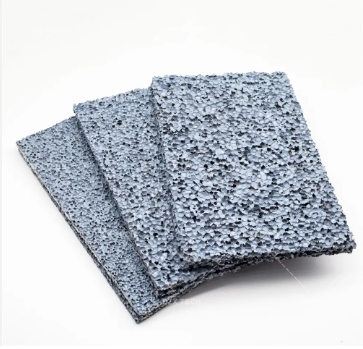
As electronic devices and power systems become more compact and powerful, managing heat efficiently has become a critical challenge across industries. One of the most innovative solutions gaining attention in the field of thermal management is thermally conductive aluminum foam — a material engineered to deliver superior heat dissipation in heat sink applications.
Products Description

Aperture | 0.3mm-7mm(can customized) |
Porosity | 63%-90% |
The MAX Sound Absorption Coefficient | ≥0.8 |
Bulk density | 0.27-1.08 g/cm3 |
size | Customized |
What Is Thermally Conductive Aluminum Foam?
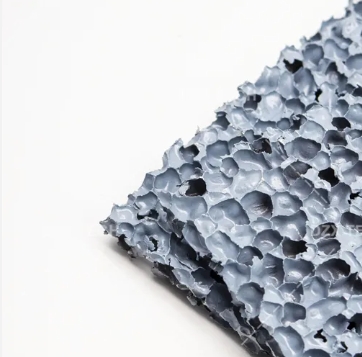
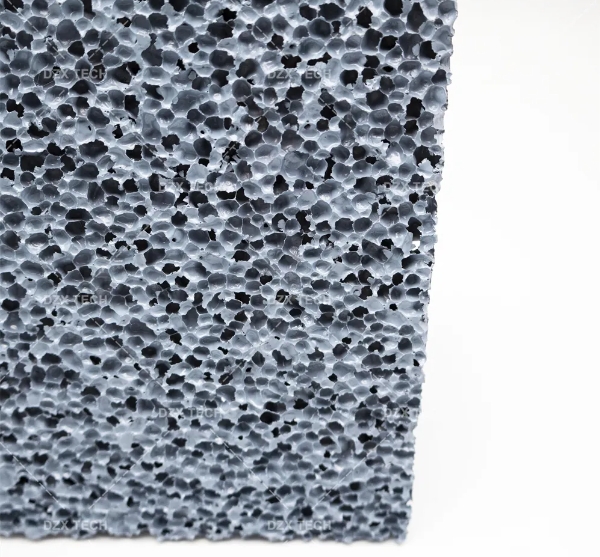
Aluminum foam is a porous metal structure created by introducing air bubbles into molten aluminum. This process results in a lightweight, rigid material with a high surface-area-to-volume ratio and open-cell structure. These features enable aluminum foam to offer excellent thermal conductivity, while also being lightweight and corrosion-resistant.
When used in heat sinks, aluminum foam provides a three-dimensional heat flow path, allowing for better thermal performance compared to traditional solid aluminum blocks or fins.
Applications in Heat Sink Design
Thermally conductive aluminum foam is increasingly used in thermal management systems, especially in industries where high-performance cooling is essential. Key application areas include:
Power Electronics
Efficiently dissipating heat from inverters, converters, and IGBT modules in electric vehicles, industrial drives, and renewable energy systems.
LED Lighting Systems
Managing thermal output in high-power LED modules to ensure longevity and consistent light quality.
Consumer Electronics
Cooling CPUs, GPUs, and batteries in compact devices like smartphones, tablets, and laptops.
Automotive & Aerospace
Used in control units, battery cooling systems, and avionics where space, weight, and reliability are key concerns.
Telecommunications Equipment
Ensuring thermal stability for antennas, base stations, and server systems that operate 24/7.
Meeting Market and User Demands
With the rise of electrification, IoT, and smart devices, manufacturers face increasing demand for thermal solutions that are:
Smaller and lighter
More efficient and reliable
Scalable for mass production
Compatible with custom or irregular designs
Aluminum foam heat sinks meet these needs, offering flexibility in design, consistency in performance, and cost-efficiency in production, particularly when used in passive cooling systems where noise and power usage must be minimized.
Industry Trends and Outlook
As the global demand for compact, high-power electronics continues to surge, aluminum foam is gaining traction not just in traditional industries, but also in emerging sectors like:
5G infrastructure
Electric aircraft
Wearable technology
High-density data centers
Manufacturers are also exploring hybrid materials, such as graphene-coated aluminum foam, to further enhance conductivity and thermal performance.