


What Are the Differences Between Ni200 and Ni201?
 Jun 20, 2024|
 View:698
I. Characteristics and Applications of Ni200
Ni200 and Ni201 are commercially pure nickel grades. Their main distinction is carbon content: Ni200 permits up to 0.15% carbon, while Ni201 limits carbon to 0.02%. This lower limit matters when evaluating nickel for elevated-temperature service.
Ni200, designated UNS N02200, is used in chemical processing and electrical components. It offers resistance to caustic alkalis and many reducing environments, together with useful electrical and thermal conductivity.
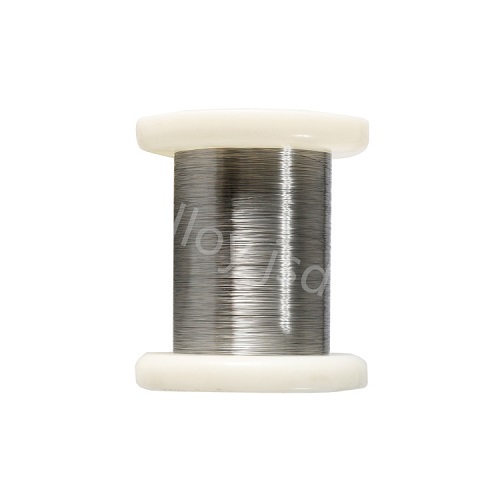
For electrical parts, the purchasing specification should define the properties required by the assembly. Where wire resistance affects performance, specify the relevant acceptance requirement and test temperature. The grade designation alone does not establish the behavior of a finished component.
Buyers reviewing DZX Pure Nickel Wire should identify the required diameter and delivery condition. A wire intended for bending may need different acceptance criteria from one used without further forming.
II. Characteristics and Advantages of Ni201
Ni201, designated UNS N02201, is the low-carbon version of Ni200. Its principal advantage is reduced susceptibility to graphite precipitation and associated embrittlement during prolonged elevated-temperature exposure.
Ni200 is normally limited to service below approximately 315°C (600°F). Above this temperature, Ni201 is generally preferred where commercially pure nickel is otherwise suitable. This is a grade-selection consideration, not a universal operating-temperature approval.
For a heated component, provide the normal operating temperature and expected exposure duration. Include excursions during cleaning or startup. The design review also needs to establish the applied load and the environment surrounding the material.
Where an existing drawing specifies Ni200, a proposed change to Ni201 should be reviewed against the complete specification. Confirm the required properties and documentation before accepting the alternative. A lower carbon limit does not remove other acceptance requirements.
III. Comparison of Corrosion Resistance
Ni200 and Ni201 have broadly similar corrosion characteristics. Both are used in alkaline service, and their resistance to acids depends on concentration and temperature. Aeration and contaminants can change the result.
Ni201's lower carbon content does not establish a general advantage in sulfur-containing environments. Sulfur compounds can embrittle nickel at elevated temperatures. Process-fluid impurities and furnace contamination therefore need separate assessment.
For chemical equipment, submit the fluid composition with the inquiry. Identify cleaning chemicals separately from the normal process medium. If an existing component has corroded, provide the exposure history and observed damage so that the review addresses the actual failure conditions.
For fabricated vessels or liners, material evaluation should consider the finished condition, including welded areas where relevant. Approval based on a general description such as “alkali resistant” leaves important service conditions undefined.
IV. Mechanical Performance Differences
In comparable annealed conditions, Ni201 generally has lower strength and hardness than Ni200. Actual values depend on product form and processing history. Cold working raises strength, while annealing changes the properties produced by earlier deformation.
Compare material in the same delivery condition. A strength figure for cold-drawn wire should not be applied to annealed plate. Likewise, a general grade comparison does not establish which material will give better fatigue performance in a particular component.
For wire, define the mechanical properties needed for feeding or forming. Include any bend-test requirement and the spool dimensions accepted by the production equipment.
For plate, specify thickness tolerance and flatness requirements. Where material will be formed, identify the intended operation and any directional requirements on the drawing. The DZX Pure Nickel Plate category provides the relevant starting point for plate and sheet inquiries.
When reviewing test reports, check the specimen condition and applicable test method. Handbook values help with initial selection; shipment acceptance should use the limits agreed in the purchase specification.
V. Selecting a Ni200 and Ni201 Supplier
For these two grades, supplier evaluation should include how material identity is maintained through processing. The order should state the exact designation, with carbon included in the required chemical-analysis results. A certificate that reports only a nominal nickel percentage does not document the principal distinction between the grades.
DZX's production capabilities include alloy melting and wire drawing, supported by annealing and precision processing. Wire cleaning and winding are also part of its published manufacturing operations. These capabilities allow the technical discussion to cover the supplied condition as well as dimensions.
DZX maintains long-term raw-material supplier relationships and describes incoming checks supported by material certificates. Its inspection capabilities include chemical analysis and mechanical testing. For a Ni200 or Ni201 order, agree on the certificate contents before production and confirm how the delivered material will be matched to its inspection records.
Distributors carrying both grades should establish separate item descriptions and labeling requirements. Where material is cut or repacked, retain the link between each package and its supporting documentation. Any proposed substitution should be identified before dispatch.
For repeat supply, submit demand by grade and product form. DZX can review the requested sizes against the processing route and order schedule. The quotation should distinguish available finished material from items requiring production.
Information to Include in the Inquiry
Grade: Ni200 or Ni201, with the corresponding UNS designation.
Specification: Applicable product standard and revision.
Dimensions: Wire diameter or plate dimensions, with tolerances.
Material condition: Required temper and mechanical-property limits.
Service: Operating temperature and relevant chemical exposure.
Inspection: Chemical-analysis requirements and other acceptance tests.
Delivery: Quantity per item, packaging requirements and requested schedule.
For a replacement order, attach the existing drawing and certificate requirements. Where the original grade is uncertain, resolve the material identity before approving production. Keep the accepted grade linked to the drawing revision on subsequent orders.

